Save your calculations offline — Get the Workshop Planner Spreadsheet ($29)

Drill Press Speed Calculator

Enter your bit diameter and material to get the recommended drill press RPM. Works for wood, plastic, aluminum, brass, and steel — and recommends the closest available speed on a typical drill press.

⚡ Quick Answer

Drill speed (RPM) = (cutting speed in SFM × 3.82) ÷ bit diameter (inches). Use a higher SFM for soft materials and a lower one for hard: roughly 100 SFM for softwood and aluminum, 60–80 for hardwood, 30–50 for mild steel, and 30 for stainless. So a 1/4" bit in softwood ≈ 1,500 RPM, but a 1/2" bit in steel ≈ 230–300 RPM. Larger bits and harder materials need SLOWER speeds. Enter your bit size and material below for an exact recommendation.

Top Drill Press Picks

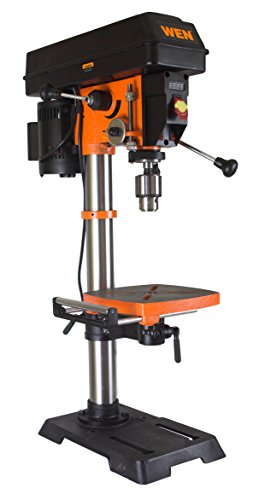
WEN 4214T 12" Variable Speed Drill Press

★★★★★ 4.7 (5,200+ reviews)

Variable speed from 580 to 3,200 RPM with a digital readout — dial in the exact RPM this calculator recommends without swapping belts.

View on Amazon
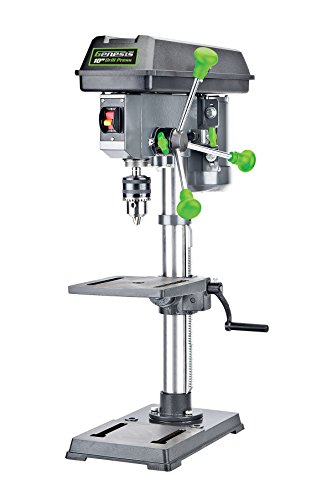
Genesis GDP1005A 10" Benchtop Drill Press

★★★★☆ 4.5 (3,100+ reviews)

Compact 5-speed benchtop drill press (620–3,100 RPM) for small shops. Great value for wood and light metal drilling.

View on Amazon
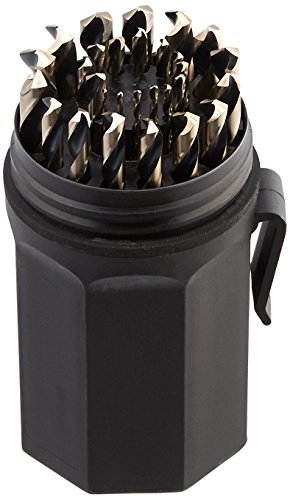
Norseman 29-Piece Cobalt Drill Bit Set

★★★★★ 4.8 (2,400+ reviews)

M42 cobalt bits that hold an edge in stainless and hardened steel at the slower RPM those metals demand. 1/16" to 1/2".

View on Amazon

As an Amazon Associate, WorkshopCalc earns from qualifying purchases.
Bit Diameter

Have a metric bit? Divide millimeters by 25.4 to get inches (e.g. 6mm ÷ 25.4 = 0.236").

Material

SFM = surface feet per minute, the recommended cutting speed for that material.

Results

Recommended Speed -- RPM
Nearest Drill Press Speed -- RPM (or below)
Cutting Speed Used -- SFM

The Math

Formula RPM = SFM × 3.82 ÷ dia
Bit Diameter --
Calculation --
Material --

What This Means

Recommended Drill Press RPM by Bit Size & Material

Target speeds rounded to the nearest common drill press setting at or below the calculated RPM (the safer choice). Calculated from RPM = SFM × 3.82 ÷ bit diameter.

Bit Size Softwood
(100 SFM)
Hardwood
(70 SFM)
Aluminum
(200 SFM)
Steel
(80 SFM)
1/16"3000300030003000
1/8"3000190030001900
1/4"110099030001100
3/8"9906501900650
1/2"6505101100600
5/8"6003901100390
3/4"390340990390
1"340250650250

Speeds capped at 3,000 RPM (a common drill press maximum). Small bits in soft materials can theoretically run faster, but most presses top out here — and that is plenty for clean holes.

How Drill Speed Works

Every material has a recommended cutting speed measured in surface feet per minute (SFM) — how fast the cutting edge should travel through the material. Soft, easy-to-cut materials like pine and aluminum tolerate high cutting speeds; hard, tough materials like stainless steel must be cut slowly or the edge overheats and dulls.

The catch is that RPM and surface speed are not the same thing. The rim of a 1" bit travels four times as far per revolution as the rim of a 1/4" bit. So to keep both bits cutting at the same safe SFM, the big bit has to spin at a quarter of the RPM. That is exactly what the formula captures:

RPM = (SFM × 3.82) ÷ bit diameter in inches

(The 3.82 comes from 12 ÷ π, which converts surface feet per minute into revolutions per minute for a diameter measured in inches.) The two things that lower your RPM are a larger bit and a harder material. Run a big Forstner bit or a metal-cutting bit too fast and you will see the warning signs immediately: smoke and scorch marks in wood, or a screeching bit and discolored chips in metal. When the recommended speed falls between two settings on your press, pick the slower one.

Signs Your Speed Is Wrong

Recommended Tools

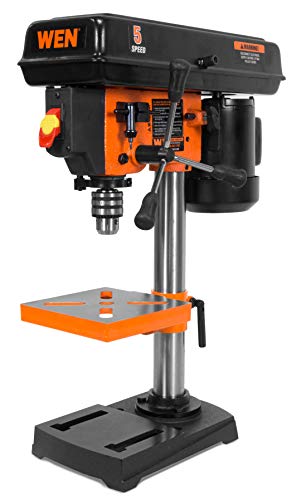
Benchtop Drill Press (5-Speed)

A compact 8–10" benchtop press is the easiest way to get consistent, square holes at the right speed for small shops.

Search on Amazon

Variable-Speed Drill Press

Variable-speed models with a digital readout let you dial in the exact RPM from this calculator without swapping belts.

Search on Amazon

Brad-Point Bit Set (Wood)

Brad-point bits have a center spur that prevents wandering and gives clean, splinter-free holes in wood at woodworking speeds.

Search on Amazon

Cobalt Bit Set (Metal)

Cobalt (M35/M42) bits hold their edge in steel and stainless at the slow speeds those metals require. Worth it for metalwork.

Search on Amazon

Cutting / Tapping Fluid

Cutting fluid keeps the edge cool and clears chips when drilling metal — essential for steel and stainless, and it extends bit life.

Search on Amazon

As an Amazon Associate, WorkshopCalc earns from qualifying purchases.

Frequently Asked Questions

Drill press speed depends on bit diameter and material. Use the formula RPM = (cutting speed in SFM × 3.82) ÷ bit diameter in inches. As a rule of thumb: small bits (1/16" to 1/8") and soft materials run fast (1,500 to 3,000+ RPM), while large bits (1/2" and up) and hard metals run slow (250 to 600 RPM). A 1/4" bit in softwood runs about 1,500 RPM, but a 1/2" bit in mild steel runs about 250 to 600 RPM. When in doubt, choose a slower speed.

Cutting speed is measured at the rim of the bit in surface feet per minute (SFM), and the rim of a large bit travels much farther per revolution than the rim of a small bit. To keep the cutting edge moving at the same safe surface speed, a larger bit must spin at fewer RPM. If a big bit spins too fast, the edges overheat, dull quickly, and can burn wood or work-harden metal. That is why RPM is divided by diameter in RPM = SFM × 3.82 ÷ diameter.

Mild steel uses about 80 SFM and stainless about 40 SFM. For mild steel: a 1/8" bit runs about 2,400 RPM, a 1/4" about 1,200 RPM, a 3/8" about 800 RPM, and a 1/2" about 600 RPM (round down to the nearest available drill press speed). Stainless runs at roughly half those speeds. Always use cutting fluid on steel and apply steady pressure so the bit cuts chips rather than rubbing.

Hardwood uses about 70 SFM. A 1/8" bit runs about 2,100 RPM, a 1/4" about 1,070 RPM, a 3/8" about 700 RPM, a 1/2" about 535 RPM, and a 1" bit only about 250 RPM. Large Forstner and spade bits in hardwood should run slow (250 to 500 RPM) to avoid burning. If you see smoke or scorch marks, slow down and clear the chips more often.

SFM stands for surface feet per minute — the speed of the cutting edge as it travels around the rim of the bit. Each material has a recommended SFM: softwood and plastic about 100, hardwood about 70, aluminum about 200, brass about 150, mild steel about 80, cast iron about 50, and stainless steel about 40. The RPM that achieves a given SFM is RPM = SFM × 3.82 ÷ bit diameter in inches.