Make informed decisions with our detailed comparisons. We break down the pros, cons, and best use cases for common workshop choices. Already know the type you want? Our single-machine reviews go one level deeper on twenty specific machines.
Understand the differences between dust collection systems.
Choose the right material for your project.
Board feet, cut lists and dust runs all assume a machine on the other end. These are the four that come up most across the calculators here.
DEWALT DWS780 12 in Sliding Miter SawDouble bevel sliding cut, the saw most shop layouts here are drawn around.
Check price on Amazon →
DEWALT DW734 Benchtop PlanerThree-knife cutterhead, the cheapest route to dimensioning your own stock instead of paying for surfaced lumber.
Check price on Amazon →
DEWALT DW618PK Router KitFixed and plunge bases in one kit, which covers both table and handheld work without buying twice.
Check price on Amazon →
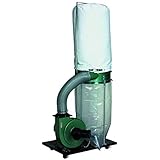
Central Machinery 2 HP Dust CollectorTwo horsepower at five micron, sized for a one-person shop rather than a shop vac pretending.
Check price on Amazon →As an Amazon Associate we earn from qualifying purchases, at no extra cost to you. Prices change, so check before buying.
Head-to-head brand matchups to help you choose the right ecosystem.
Compare tool types to find the right fit for your shop.
Compare cabinet and contractor table saws. Understand the differences in power, precision, dust collection, and value for serious woodworkers.
Compare track saws and table saws. Discover which is better for your shop based on space, portability, cut quality, and project types.
Compare circular saws and miter saws. Learn when each tool excels for crosscuts, rip cuts, and angled cuts in your woodworking projects.
Compare jigsaws and reciprocating saws. Understand which is best for curves, demolition, and different cutting applications.
Compare scroll saws and band saws for intricate cuts, resawing, and curved work. Find the right saw for your detailed woodworking projects.
Compare benchtop and floor-standing drill presses. Evaluate power, capacity, and space requirements for your workshop needs.
Compare impact drivers and drills. Learn when to use each tool for driving screws, drilling holes, and fastening applications.
Compare brad nailers and finish nailers. Understand gauge differences, holding power, and best applications for trim and cabinetry work.
Compare belt sanders and orbital sanders. Learn which sander is best for stock removal, finish sanding, and different surface types.
When to use each, and the combo machines that give you both.
The fastest, cleanest way to cut square mortises.
Compare router tables and handheld routers. Discover which setup is best for edge profiles, joinery, and template work.
Compare table saws and bandsaws. Learn which saw to buy first based on your projects, space, and woodworking goals.
The slide buys crosscut width and nothing else. When you need it, and when the stiffer saw is the better buy.
Cordless cut quality and dust collection against corded capacity for two thirds the price.
The first-big-tool decision, settled by whether you are building furniture or trimming a room.
Trim router or 2 horsepower kit: bit shank, table mounting, and which you will actually reach for.
Eighty decibels against sixty, and why that gap decides it for an attached garage.
Two tools that share a name and nothing else. What each one holds together.
Bulk material removal against precision detail work, and which belongs in the shop first.
Ease of learning against outdoor capability, for anyone buying a first welder.
Filtration, not suction, is the difference, and it is the fine dust that damages lungs.
Speed and clean edges against a tool that costs a tenth as much and does a dozen other jobs.
Compare thickness planers and jointers. Understand what each tool does, which to buy first, and when you need both.
Compare corded and cordless power tools. Battery technology, power delivery, and cost analysis for workshop decision-making.
Compare welding, cutting, and machining tools for your metal shop.
Compare MIG and TIG welding processes. Speed vs precision, learning curve, material compatibility, and cost analysis.
Compare portable sawmill types. Cut quality, waste, speed, portability, and cost for milling your own lumber.
Compare gas and electric chainsaws. Power, runtime, weight, noise, and maintenance for firewood and milling.
Blade speed, teeth, and coolant: why they are not interchangeable.
Which benchtop milling machine fits your parts, rigidity, and bench space.
Compare finishing systems and digital fabrication tools.
Compare HVLP and airless spray systems. Finish quality, overspray, speed, and best applications for each.
Compare CNC routers and laser engravers. Materials, precision, speed, cost, and which is right for your workshop.
Compare drum sanders and planers. Material removal, finish quality, and when you need both tools.
Compare pin and pinless moisture meters. Accuracy, surface damage, and best uses for woodworking.
Compare climate control and power options for your workshop.
Compare propane and electric heaters. BTU output, operating cost, installation, and safety for garage workshops.
Compare mini splits and space heaters. Year-round vs seasonal, efficiency, installation cost, and safety.
Compare inverter and conventional generators. Power quality, noise, fuel efficiency, and best uses for workshops.
Get specific numbers for your workshop equipment.
Decided which type you need? These reviews cover the individual machines, and each one names the weakness alongside the specification. See all 20 reviews.
The saw that ends one category of injury, and the injury it does nothing about.
MIG, flux-cored, stick and AC/DC TIG in 56 pounds, and where the compromise lands.
Cyclonic separation, 18.8 amps, and no plug on the end of the cord.
5 HP and a spiral cutterhead for less than a 15-inch machine from the premium brands.
7,000 watts of clean power, and the two ways people get killed using generators like it.
80 percent efficiency an inch below the ceiling, and the combustion air question that decides whether it belongs in your shop.