Both machines can end up cutting a mortise, but they were built for different jobs. A hollow-chisel mortiser exists to cut clean square holes for mortise-and-tenon joinery, while a drill press is a general-purpose boring machine that can be pressed into mortising with an attachment or by squaring holes by hand. This page compares hole shape, speed, precision, and cost so you can pick the right tool. For full model roundups, see our best mortisers guide and best benchtop drill presses guide.
A dedicated hollow-chisel mortiser cuts clean square mortises fast and is the right tool if you cut joinery often. A drill press with a mortising attachment is cheaper and okay for occasional use, but slower to set up and less precise. A drill press alone only bores round holes, which you then have to square up by hand with a chisel. Cut mortises regularly, buy a mortiser; cut a few a year, a drill press does the job.
At a Glance: Mortiser vs Drill Press
Here is how the two machines stack up on the factors that matter most for cutting mortises.
| Factor | Hollow-Chisel Mortiser | Drill Press |
|---|---|---|
| Hole Shape | Square holes directly from a hollow chisel | Round holes; square by hand or add a mortising attachment |
| Speed | Fast for repeated mortises with hold-down and lever | Slower; extra chiseling or attachment setup per mortise |
| Precision | High; tall frame and fence keep chisel square and aligned | Lower for mortises; side loads and hand squaring add error |
| Cost | Single-purpose spend on a dedicated machine | One versatile machine you likely already own |
| Best For | Frequent mortise-and-tenon joinery | General drilling plus the occasional mortise |
Two Machines to Consider
Both of these ship factory-direct from Grizzly Industrial, with full parts availability and U.S. support. Specs vary by production run, so tap through for current details and pricing.
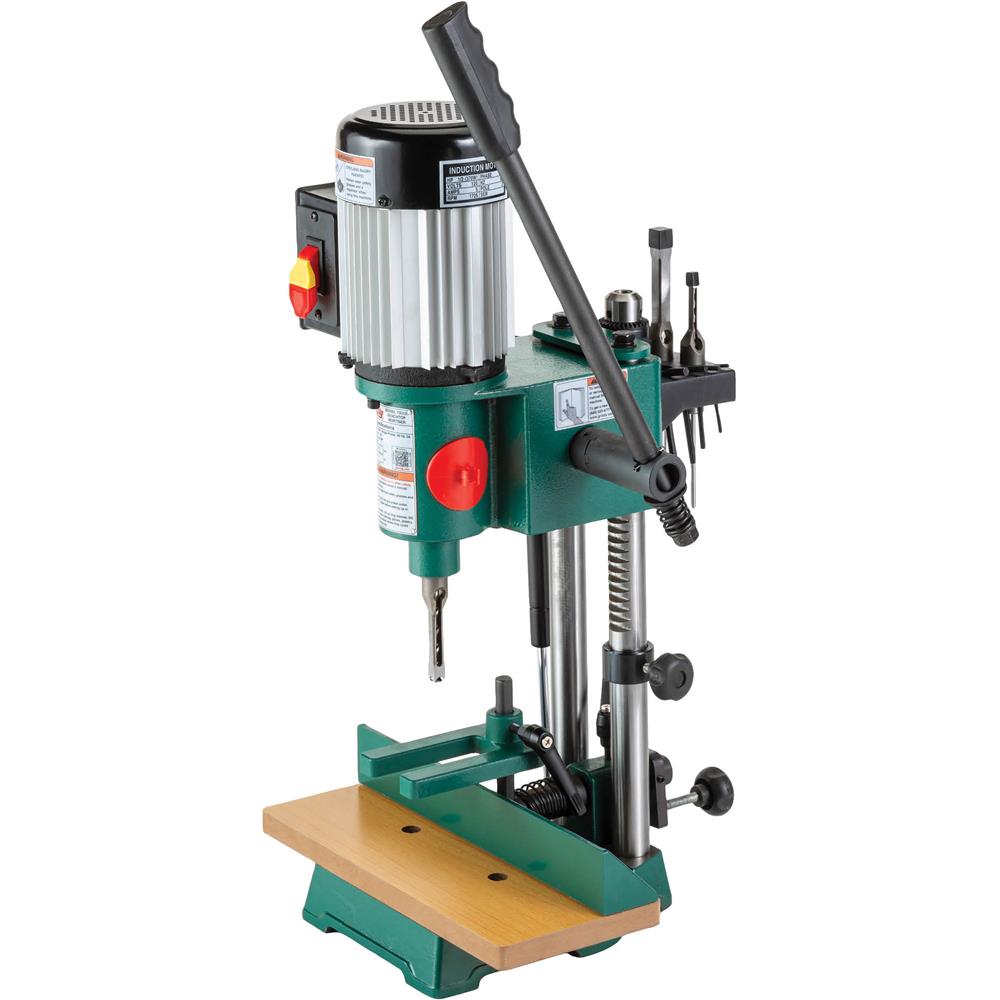
Grizzly T33127 1/2 HP Benchtop Hollow-Chisel Mortiser
A dedicated benchtop mortiser with a hold-down and chisel lever built to plunge square holes for mortise-and-tenon joinery.
Shop at Grizzly.com →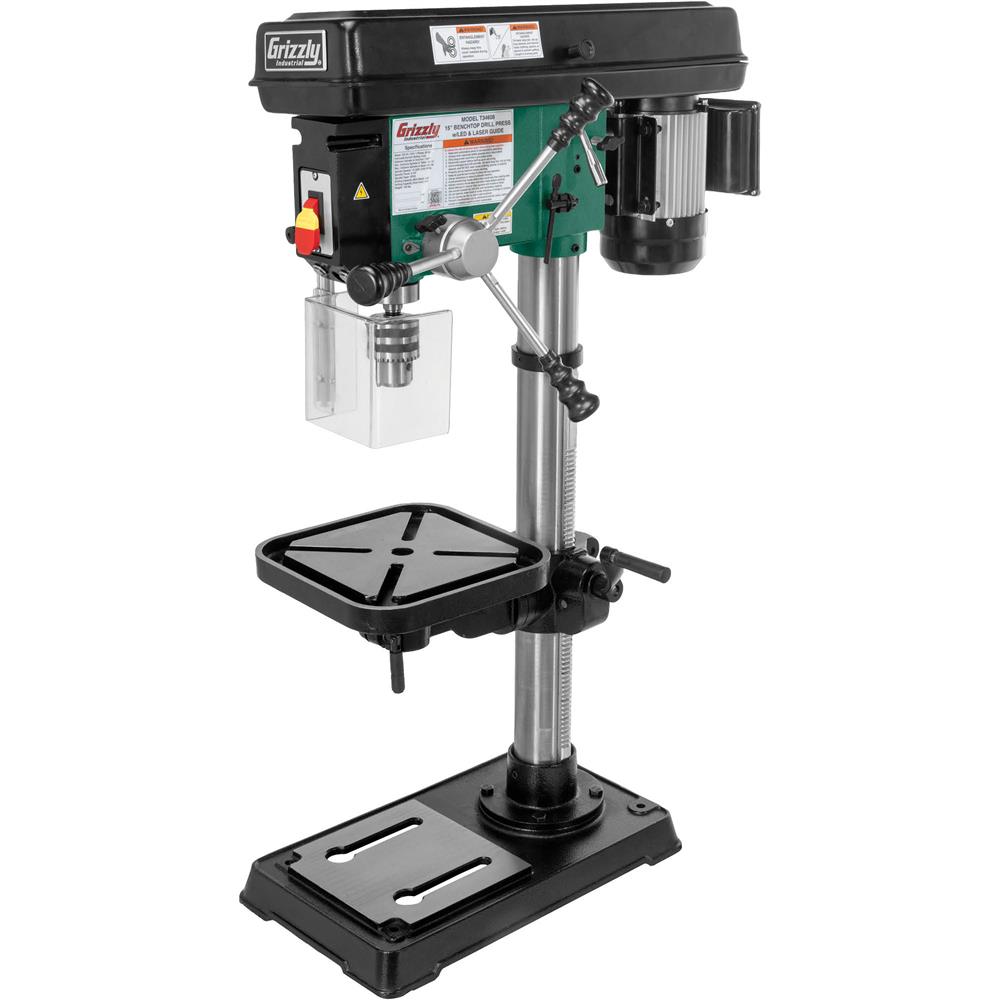
Grizzly T34608 15" Benchtop Drill Press
A 15-inch benchtop drill press with LED light and laser guide that bores accurate round holes and accepts a mortising attachment for occasional joinery.
Shop at Grizzly.com →Choose a Mortiser If
- You cut mortise-and-tenon joints regularly for doors, tables, chairs, or beds.
- You want square holes with flat walls straight off the machine, no hand chiseling.
- You value speed and repeatability across many identical mortises.
- You need the hold-down, tall frame, and lever leverage built for chisel plunging force.
- You do timber-frame or heavier joinery where large, deep mortises are common.
Choose a Drill Press If
- You cut only a handful of mortises a year and cannot justify a single-purpose machine.
- You want one versatile tool that bores accurate round holes for many different tasks.
- You are willing to add a mortising attachment or square the corners by hand.
- You are limited on bench space or budget and already own or plan to buy a drill press.
- Your work is mostly general drilling, with mortising an occasional extra.
Ready to Buy a Mortiser?
See our full roundup of benchtop and floor-standing hollow-chisel mortisers, ranked by chisel capacity, stroke, and value.
Read the Best Mortisers GuideAs an Amazon Associate and Grizzly Industrial affiliate, WorkshopCalc earns from qualifying purchases. Our picks are based on published specifications and category research, not paid placement.
The machines these numbers point at
Board feet, cut lists and dust runs all assume a machine on the other end. These are the four that come up most across the calculators here.
 DEWALT DWS780 12 in Sliding Miter Saw
Double bevel sliding cut, the saw most shop layouts here are drawn around.
Check price on Amazon → DEWALT DW734 Benchtop Planer
Three-knife cutterhead, the cheapest route to dimensioning your own stock instead of paying for surfaced lumber.
Check price on Amazon → DEWALT DW618PK Router Kit
Fixed and plunge bases in one kit, which covers both table and handheld work without buying twice.
Check price on Amazon → Central Machinery 2 HP Dust Collector
Two horsepower at five micron, sized for a one-person shop rather than a shop vac pretending.
Check price on Amazon →As an Amazon Associate we earn from qualifying purchases, at no extra cost to you. Prices change, so check before buying.