A wood bandsaw and a metal-cutting bandsaw share the same basic layout, two wheels and a continuous blade, but they are built to run at very different speeds. A wood bandsaw spins its blade fast to slice through soft material, while a metal bandsaw crawls along slowly with more teeth and often coolant so it can shear steel without overheating. This page compares blade speed, tooth count, orientation, coolant, and the materials each one handles best. For full model roundups, see our best bandsaws guide and best metal-cutting bandsaws guide.
The core difference is blade speed. A wood bandsaw runs its blade fast, around 2,000 to 3,000 feet per minute, to clear large chips from soft material. A metal-cutting bandsaw runs slow, roughly 80 to 400 feet per minute, with more teeth per inch and often a coolant flood. Running metal on a fast wood saw burns the blade and strips the teeth, so match the saw to the material.
At a Glance: Wood Bandsaw vs Metal Bandsaw
Here is how the two machines stack up on the factors that matter most.
| Factor | Wood Bandsaw | Metal Bandsaw |
|---|---|---|
| Blade Speed | Fast, roughly 2,000 to 3,000 FPM | Slow, roughly 80 to 400 FPM |
| Teeth (TPI) | Coarse, few teeth per inch with large gullets | Fine, more teeth per inch to shear metal |
| Orientation | Vertical; you feed the workpiece into the blade | Often horizontal, gravity-fed to cut stock to length |
| Coolant | None; wood cuts dry | Often uses cutting fluid to cool and flush chips |
| Best Materials | Wood, plastics, and other soft materials | Steel, aluminum, and other metals |
The machines these numbers are really about
Sizing a duct run or a cut list is planning for a machine you either own or are about to buy. These four are the ones that change what the shop can do, rather than making the current setup slightly tidier.
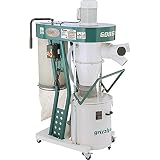 Grizzly G0861 2 HP Portable Cyclone
The step up from a bag collector. Cyclone separation keeps the filter clean, which is the thing that quietly halves a bag unit's airflow after a few months.
Check price on Amazon →
Grizzly G0861 2 HP Portable Cyclone
The step up from a bag collector. Cyclone separation keeps the filter clean, which is the thing that quietly halves a bag unit's airflow after a few months.
Check price on Amazon →
 Powermatic TurboCone Dust Collector
Two-micron canister and enough static pressure to run a long duct main rather than dragging a hose to each machine.
Check price on Amazon →
Powermatic TurboCone Dust Collector
Two-micron canister and enough static pressure to run a long duct main rather than dragging a hose to each machine.
Check price on Amazon →
 JET 14 in Bandsaw, 1.75 HP
Thirteen inches of resaw. The machine that turns expensive boards into two boards, which is where it pays for itself.
Check price on Amazon →
JET 14 in Bandsaw, 1.75 HP
Thirteen inches of resaw. The machine that turns expensive boards into two boards, which is where it pays for itself.
Check price on Amazon →
 Powermatic 8 in Helical Jointer
Helical head, so figured stock comes off flat instead of torn out. The one machine most shops regret buying small.
Check price on Amazon →
Powermatic 8 in Helical Jointer
Helical head, so figured stock comes off flat instead of torn out. The one machine most shops regret buying small.
Check price on Amazon →
As an Amazon Associate we earn from qualifying purchases, at no extra cost to you. Prices change, so check before buying.
Two Machines to Consider
Both of these ship factory-direct from Grizzly Industrial, with full parts availability and U.S. support. Specs vary by production run, so tap through for current details and pricing.
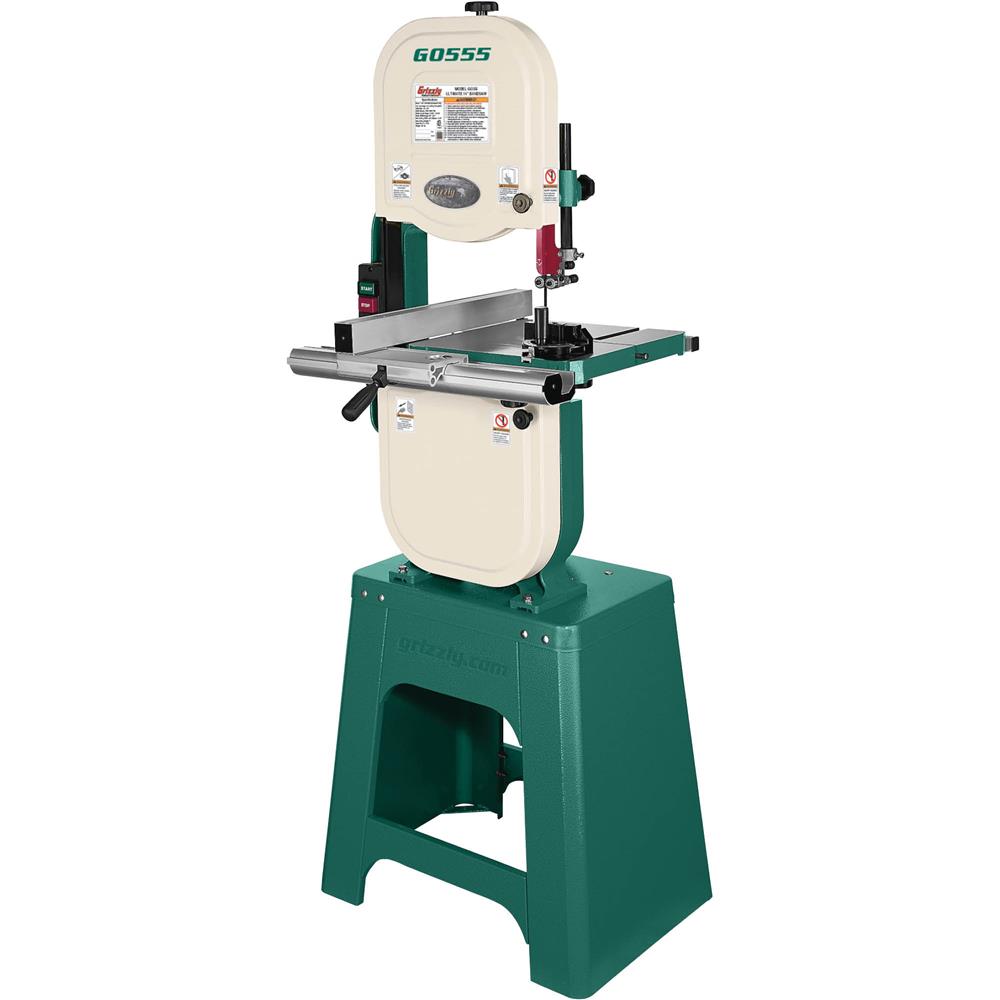
Grizzly G0555 14" 1 HP Bandsaw
A classic 14-inch vertical wood bandsaw that runs at woodworking blade speeds for resawing, curves, and general shop cuts in soft material.
Shop at Grizzly.com →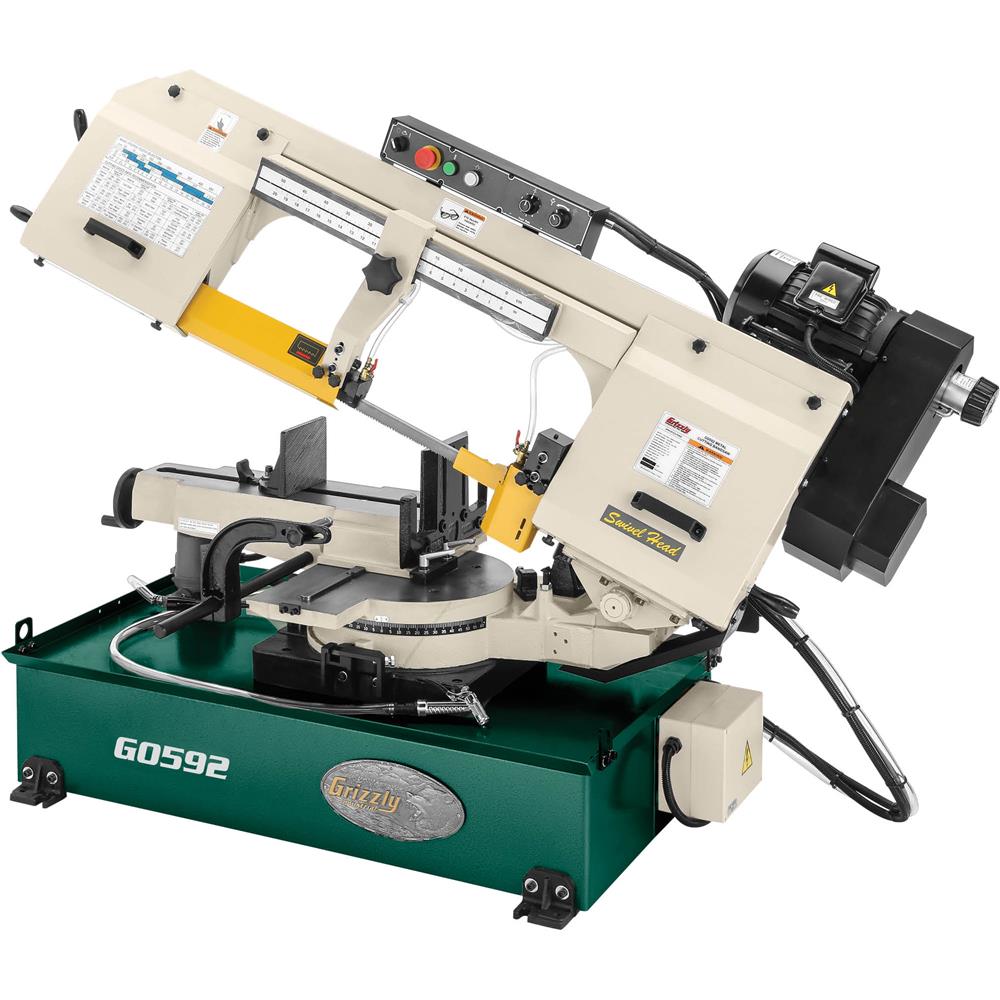
Grizzly G0592 10" x 18" 2 HP Metal-Cutting Bandsaw
A horizontal metal-cutting bandsaw that runs at slow blade speeds with coolant support to shear steel and other metal stock to length.
Shop at Grizzly.com →Choose a Wood Bandsaw If
- You cut wood, plywood, plastics, and other soft materials.
- You want the high blade speed and coarse teeth that clear sawdust efficiently.
- You resaw boards, cut curves, or make general vertical cuts by feeding the workpiece.
- You do not need coolant and want a machine that cuts dry.
- Your work is woodworking, and any metal cutting is limited to thin, soft non-ferrous stock.
Choose a Metal-Cutting Bandsaw If
- You cut steel, aluminum, or other metal stock to length.
- You need the slow blade speed and fine-tooth blade that shear metal without overheating.
- You want coolant support to cool the cut, flush chips, and extend blade life.
- You cut bar, tube, or angle and benefit from a horizontal, gravity-fed design.
- Your work is metalworking or fabrication where wood cutting is rare.
Dialing In Your Cut?
Matching blade speed to material is the whole game. See our feeds and speeds reference for the numbers behind clean cuts and longer blade life.
Read the Feeds and Speeds ReferenceAs an Amazon Associate and Grizzly Industrial affiliate, WorkshopCalc earns from qualifying purchases. Our picks are based on published specifications and category research, not paid placement.
The machines these numbers point at
Board feet, cut lists and dust runs all assume a machine on the other end. These are the four that come up most across the calculators here.
 DEWALT DWS780 12 in Sliding Miter Saw
Double bevel sliding cut, the saw most shop layouts here are drawn around.
Check price on Amazon → DEWALT DW734 Benchtop Planer
Three-knife cutterhead, the cheapest route to dimensioning your own stock instead of paying for surfaced lumber.
Check price on Amazon → DEWALT DW618PK Router Kit
Fixed and plunge bases in one kit, which covers both table and handheld work without buying twice.
Check price on Amazon → Central Machinery 2 HP Dust Collector
Two horsepower at five micron, sized for a one-person shop rather than a shop vac pretending.
Check price on Amazon →As an Amazon Associate we earn from qualifying purchases, at no extra cost to you. Prices change, so check before buying.