Feeds and speeds come down to two numbers: how fast the cutting edge moves across the material (surface speed, SFM) and how fast you advance the tool (feed). The rule mirrors drilling: soft materials and small diameters run fast; hard materials and large diameters run slow. The charts below give machining SFM by material, the RPM those speeds work out to by diameter, and milling chip loads, all for high-speed-steel (HSS) tooling. This is the machining companion to our Drill Speed Chart (drilling) and CNC Feeds & Speeds Chart (router bits). If you are still choosing the machine to run these numbers on, see our guides to the best benchtop milling machines and the best metal-cutting bandsaws.
Spindle speed is RPM = (SFM × 3.82) ÷ diameter (in.). With HSS tooling, aluminum runs ~300 SFM (about 1150 RPM on a 1" diameter), mild steel ~100 SFM (380 RPM), stainless ~50 SFM (190 RPM), and cast iron ~65 SFM (250 RPM). Carbide runs 2–3× faster. Milling feed is RPM × chip load per tooth × number of flutes. Full charts below.
Cutting Speed (SFM) by Material
Surface speed is the master number, every RPM below is derived from it. These are recommended surface feet per minute for turning and milling. Use the HSS column for high-speed-steel tools; carbide tooling runs 2 to 3 times faster on a rigid machine.
| Material | HSS Tooling (SFM) | Carbide Tooling (SFM) |
|---|---|---|
| Aluminum | 200–400 | 600–1000 |
| Brass / Bronze | 150–300 | 300–700 |
| Copper | 100–200 | 200–400 |
| Cast Iron (gray) | 50–80 | 150–300 |
| Mild Steel (1018) | 80–120 | 300–600 |
| Alloy Steel (4140) | 60–90 | 200–400 |
| Stainless (304/316) | 40–60 | 150–300 |
| Tool Steel | 40–70 | 150–300 |
| Titanium | 30–50 | 100–200 |
| Plastics / Delrin | 300–500 | 500–1000 |


WorkshopCalc is an Amazon Associate and a Grizzly Industrial affiliate. We earn from qualifying purchases.
The RPM & Feed-Rate Formulas
Once you know the SFM for your material, you solve for the RPM that holds the cutting edge at that speed for a given diameter, the workpiece diameter on a lathe, or the cutter diameter on a mill.
Imperial & Metric Formulas
RPM = (SFM × 3.82) ÷ Diameter (inches)
RPM = (1000 × surface speed in m/min) ÷ (π × Diameter in mm)
Milling feed (in/min) = RPM × chip load per tooth × number of flutes
Example: mild steel (100 SFM) turned at 1" diameter → (100 × 3.82) ÷ 1 = 382 RPM.
Spindle RPM by Diameter (HSS)
Recommended RPM for turning (by workpiece diameter) and milling (by cutter diameter) with HSS tooling, using mid-range SFM for each material. Round to the nearest speed your machine offers, and multiply by 2 to 3 for carbide.
| Diameter | Aluminum | Brass | Cast Iron | Mild Steel | Stainless |
|---|---|---|---|---|---|
| 1/4" | 4500 | 3050 | 990 | 1500 | 765 |
| 1/2" | 2300 | 1530 | 495 | 765 | 380 |
| 3/4" | 1530 | 1020 | 330 | 510 | 255 |
| 1" | 1150 | 765 | 250 | 380 | 190 |
| 1-1/2" | 765 | 510 | 165 | 255 | 127 |
| 2" | 575 | 380 | 125 | 190 | 95 |
| 3" | 380 | 255 | 83 | 127 | 64 |
| 4" | 285 | 190 | 62 | 95 | 48 |
Based on HSS mid-range SFM: aluminum 300, brass 200, cast iron 65, mild steel 100, stainless 50.
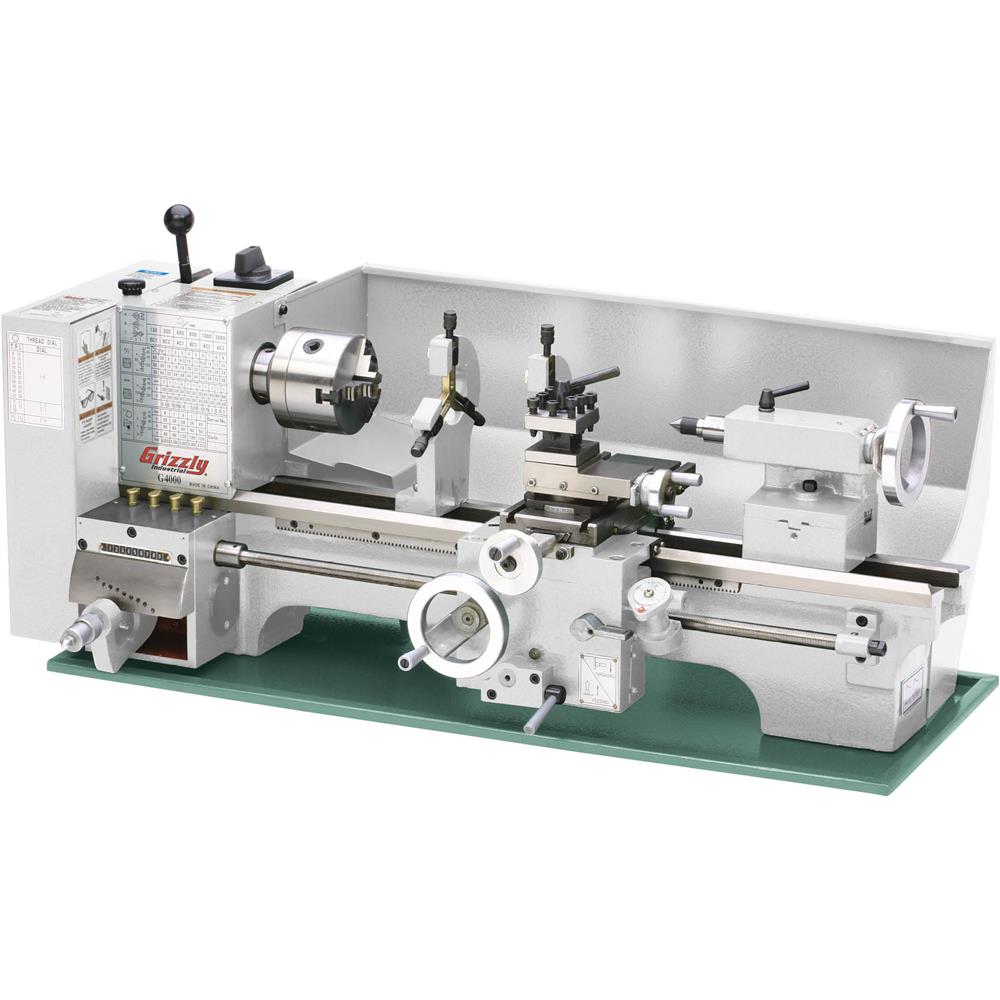
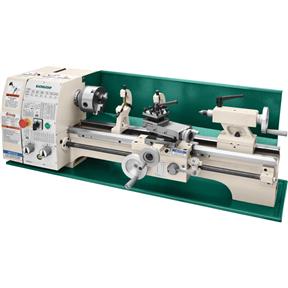
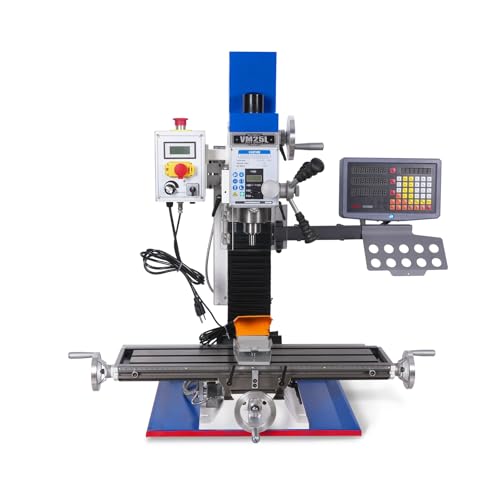
Dialing in these speeds needs a machine that holds them. The Grizzly G4000 9" x 19" Benchtop Metal Lathe (turning) and Grizzly G0761 10" x 32" HD Benchtop Mill/Drill (milling) are strong shop machines from Grizzly Industrial, often priced lower factory-direct than through a reseller and backed by full parts availability and U.S. support.
Milling Chip Load (Feed per Tooth)
The RPM sets surface speed; the chip load sets how much each flute cuts. Multiply chip load by RPM and the number of flutes to get feed in inches per minute. Chip load per tooth in inches for HSS end mills:
| End Mill Diameter | Aluminum | Mild Steel | Stainless |
|---|---|---|---|
| 1/8" | 0.0010 | 0.0005 | 0.0005 |
| 1/4" | 0.0020 | 0.0010 | 0.0007 |
| 3/8" | 0.0030 | 0.0015 | 0.0010 |
| 1/2" | 0.0040 | 0.0020 | 0.0015 |
| 3/4" | 0.0050 | 0.0030 | 0.0020 |
| 1" | 0.0060 | 0.0040 | 0.0025 |
Machining Tip
Chips tell the truth. Aim for tight commas or small curls, not dust and not long stringy ribbons. If the tool chatters or the finish is rough, first lower the RPM, then increase the feed slightly, a light, fast rub work-hardens steel and stainless and burns the edge. Use cutting oil on steels and stainless; aluminum cuts well dry or with a mist.
Turning Feed per Revolution
On the lathe, feed is set as inches per revolution rather than per tooth. Use light feeds for finishing and heavier feeds for roughing, then let the surface speed chart set your RPM.
| Operation | Feed (in/rev) | Notes |
|---|---|---|
| Roughing | 0.010–0.020 | Maximum material removal; heavier cuts on rigid machines |
| General turning | 0.005–0.012 | Everyday cuts on most bench and hobby lathes |
| Finishing | 0.002–0.005 | Fine surface finish; pair with a sharp, honed tool |
| Parting / grooving | 0.001–0.003 | Slow and steady; flood the cut and keep the tool on center |
Need Drilling or Router Speeds Instead?
This chart covers turning and milling. For drill-press RPM by bit and material, or CNC router feeds and speeds, use the matching references.
Drill Speed Chart CNC Feeds & SpeedsTooling That Holds These Speeds
Sharp, rigid tooling is what lets you actually run the numbers above.
7-Piece Indexable Carbide Turning Tool Set
Best for the Lathe- Runs the higher carbide SFM in the chart above
- Swap inserts instead of regrinding HSS tools
- Covers turning, facing, and parting operations
- Great match for a benchtop metal lathe
HSS & Carbide End Mill Set
Best for the Mill- Pair with the chip-load chart to set feed rate
- 2-flute for aluminum, 4-flute for steel finishing
- Covers 1/8" through 1/2" for most benchtop mills
- Carbide options run the higher SFM values
As an Amazon Associate and Grizzly Industrial affiliate, WorkshopCalc earns from qualifying purchases. This helps support our free calculators and guides.