A belt sander and a disc sander do different jobs because their abrasives move in different ways. A belt sander runs a loop of sandpaper in a straight line, so it removes material along the length of a board and shines on flat faces, long edges, and heavy stock removal. A disc sander spins a round abrasive against a table, so it squares up and smooths the ends of a workpiece. Most bench machines combine both. For full picks see our best belt and disc sanders guide, and for tight inside curves see our best oscillating spindle sanders.
Use a belt sander for long stock removal, flattening faces, and sanding edges; use a disc sander for end grain and squaring or mitering the ends of a part against the table. You rarely have to choose: a combination belt/disc sander puts both on one motor and one bench footprint, which is why it is the practical buy for most shops.
At a Glance
How the two sanders compare on the things that decide which one you reach for.
| Belt Sander | Disc Sander | |
|---|---|---|
| Best For | Fast stock removal, flat faces, long edges, curves on the platen | End grain, squaring crosscuts and miters, small parts |
| Motion | Abrasive belt travels in a straight line over rollers | Round disc spins on a backing plate |
| Work Held Against | Belt surface and platen, often with an adjustable table | Flat table with a miter gauge for angled ends |
| Typical Use | Roughing and flattening before final smoothing | Precise, square or angled ends after cutting |
| Weakness | Easy to round over or dish a surface if you linger | Speed and cut vary across the disc; limited depth on long boards |
Which One to Buy
Most shops buy a combo that has both a belt and a disc, so you get long stock removal and square ends from a single machine.
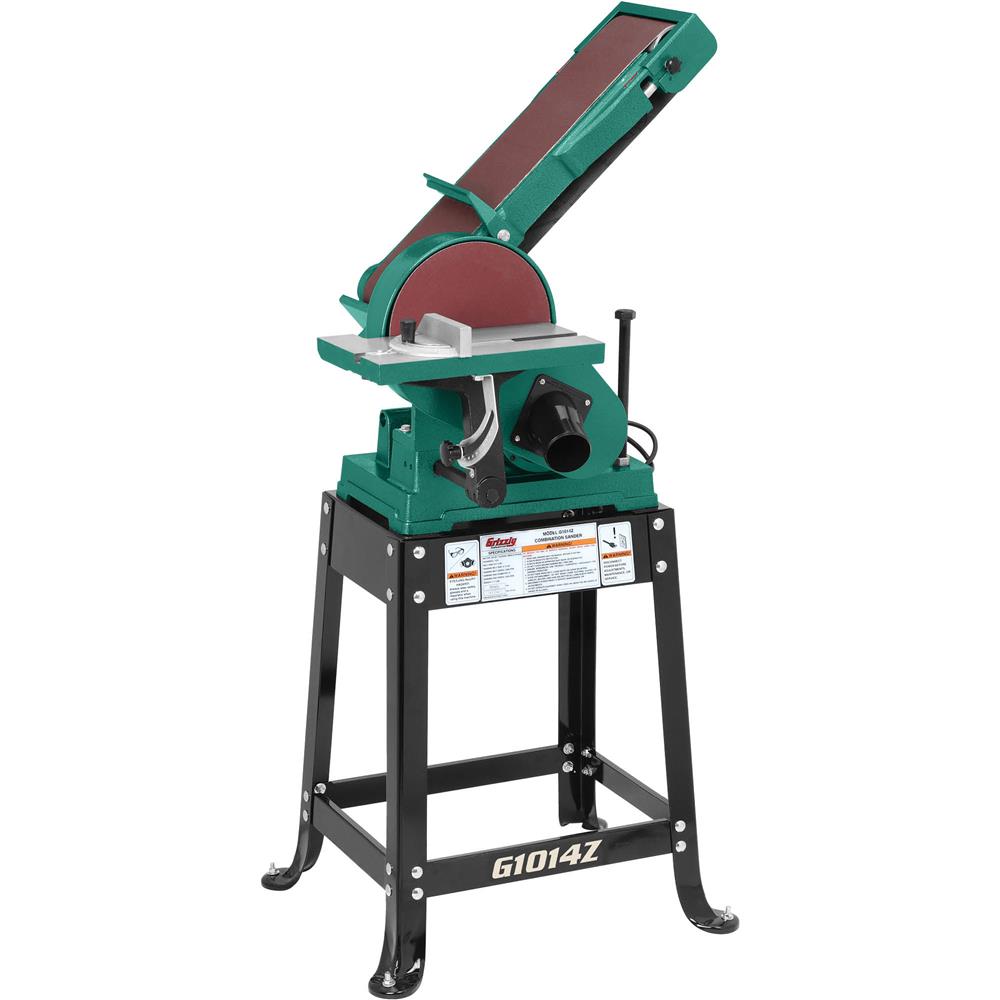
Grizzly G1014Z 6" x 48" Belt / 9" Disc Combo Sander
A wide 6" x 48" belt that tilts for edges plus a 9" disc, giving you heavy face and edge sanding alongside square-end work on one stand.
Shop at Grizzly.com →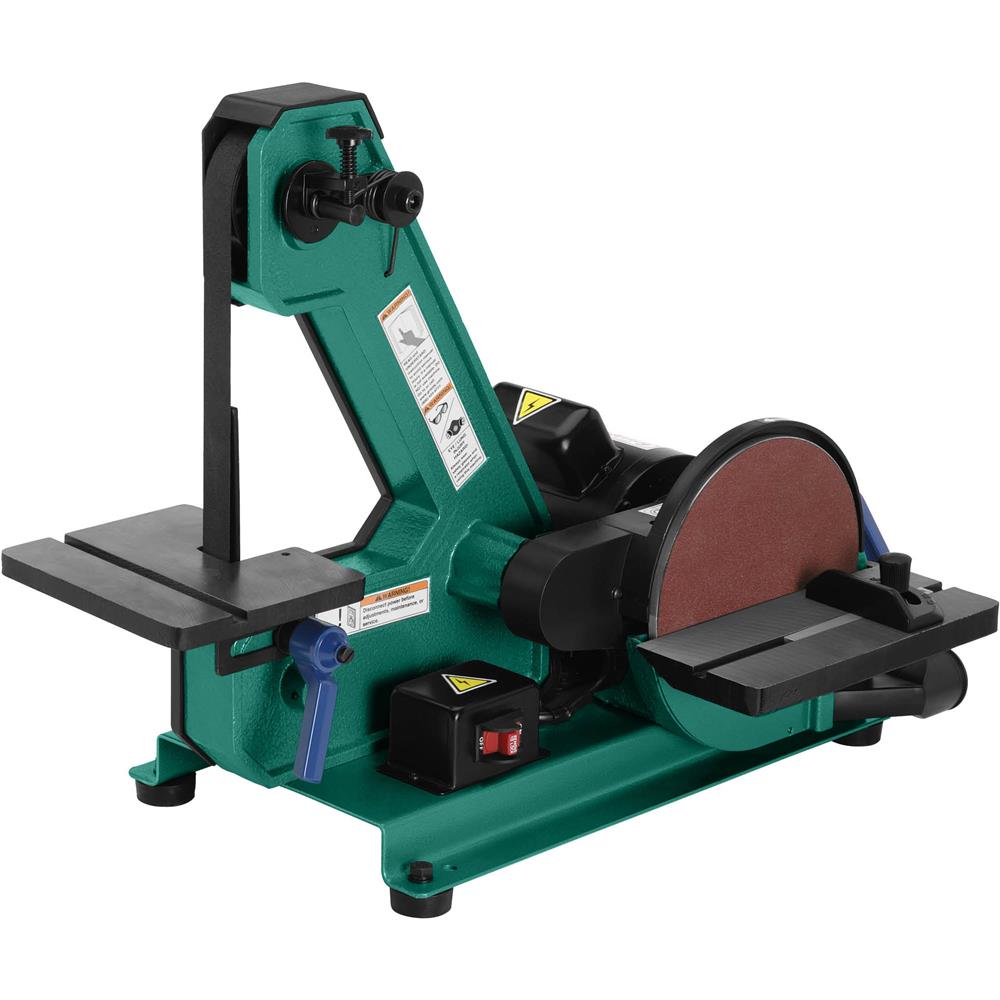
Grizzly H8192 1" x 42" Belt / 8" Disc Combo Sander
A narrow 1" x 42" belt and 8" disc in a small footprint, suited to detail work, small parts, and benches where a full-width combo will not fit.
Shop at Grizzly.com →Choose a Belt Sander If
- You remove a lot of stock and want to work fast.
- You flatten wide faces or sand long edges that need a straight, grain-following stroke.
- You shape gentle curves or bevels on the belt platen.
- You prep rough or reclaimed lumber before final smoothing.
Choose a Disc Sander If
- You clean up end grain and crosscut ends after sawing.
- You need square or precise mitered ends using the table and miter gauge.
- You sand small parts that are easier to hold against a flat, spinning face.
- You want to fine-tune a part to a layout line quickly.
See the Full Sander Lineup
Compare combination belt and disc sanders side by side, from compact benchtop combos to wide-belt shop machines.
Read the Best Belt & Disc Sanders GuideAs an Amazon Associate and Grizzly Industrial affiliate, WorkshopCalc earns from qualifying purchases.
The machines these numbers point at
Board feet, cut lists and dust runs all assume a machine on the other end. These are the four that come up most across the calculators here.
 DEWALT DWS780 12 in Sliding Miter Saw
Double bevel sliding cut, the saw most shop layouts here are drawn around.
Check price on Amazon → DEWALT DW734 Benchtop Planer
Three-knife cutterhead, the cheapest route to dimensioning your own stock instead of paying for surfaced lumber.
Check price on Amazon → DEWALT DW618PK Router Kit
Fixed and plunge bases in one kit, which covers both table and handheld work without buying twice.
Check price on Amazon → Central Machinery 2 HP Dust Collector
Two horsepower at five micron, sized for a one-person shop rather than a shop vac pretending.
Check price on Amazon →As an Amazon Associate we earn from qualifying purchases, at no extra cost to you. Prices change, so check before buying.