A belt and disc combo sander puts two shaping tools on one base: a flat belt for edges and faces, and a rotating disc with a tilting table for squaring ends and truing angles. The right one comes down to three things: belt and disc size (capacity for your typical stock), table and miter gauge (how square and repeatable your sanding is), and motor and duty (benchtop hobby use vs. shop-grade continuous work). Below are our top combo picks for 2026, followed by a buying guide. For finishing work after shaping, see our best random orbital sanders and best oscillating spindle sanders guides; if you sand a lot of long, square edges, a dedicated edge sander does the job faster and squarer than a combo; and for putting a polished edge on metal, knives, or hardware, our best bench buffers & polishers guide. Still weighing a belt against a standalone disc? Our belt sander vs disc sander comparison covers when to use each and the combo machines that give you both.
Best overall combo: the Grizzly G1014Z with a 6x48 belt, 9" disc, and cast-iron build. Best compact combo: the Grizzly H8192 (1x42 belt, 8" disc). Best budget: the WEN 6502T (4x36 belt, 6" disc, cast-iron base). Tightest bench: the WEN 6515T (1x30 belt, 5" disc). Premium shop-grade: the JET JSG-6DCK (6x48 belt, 12" disc, 1-1/2 HP). Match belt width to the widest edge you sand often, then step up one size.
Belt & Disc Sanders Compared
Specs vary by production run; treat prices as planning estimates and tap any button for current pricing.
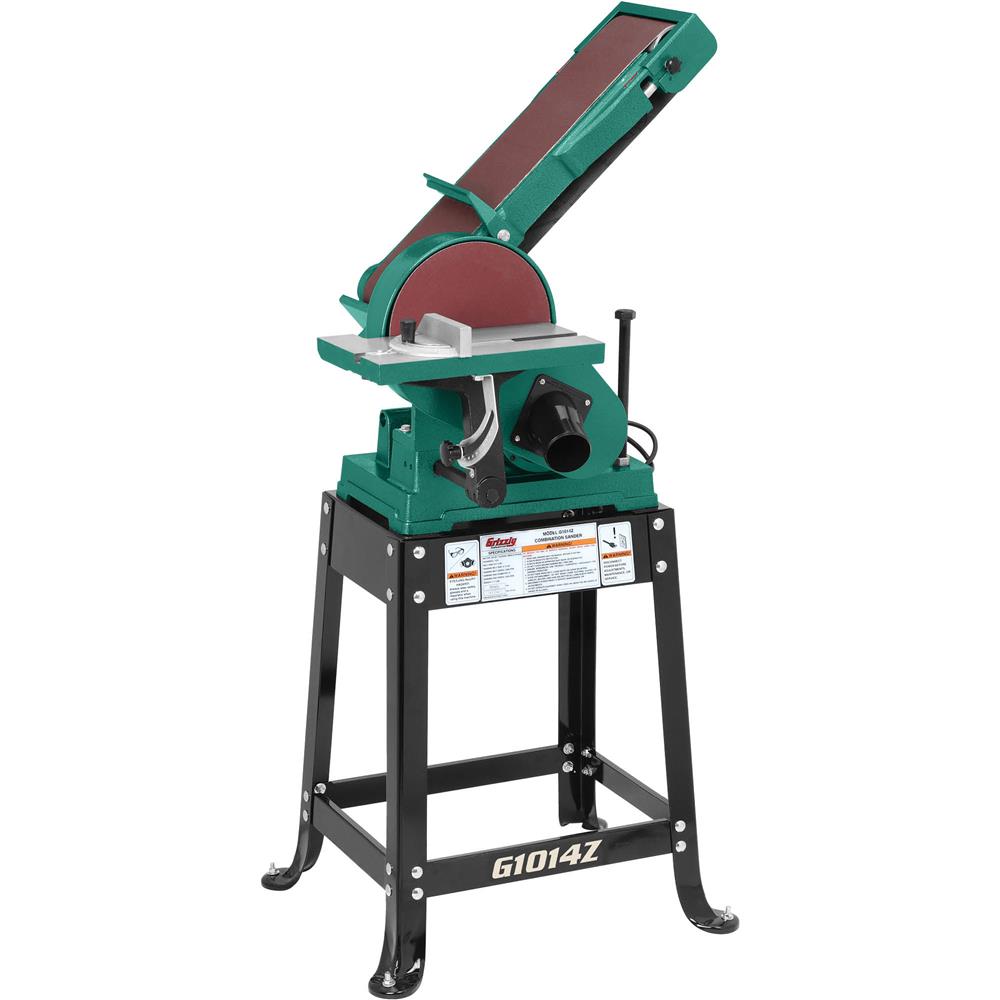
Grizzly G1014Z 6" x 48" Belt / 9" Disc Combo Sander
6x48 belt + 9" disc, cast-iron
Shop at Grizzly.com →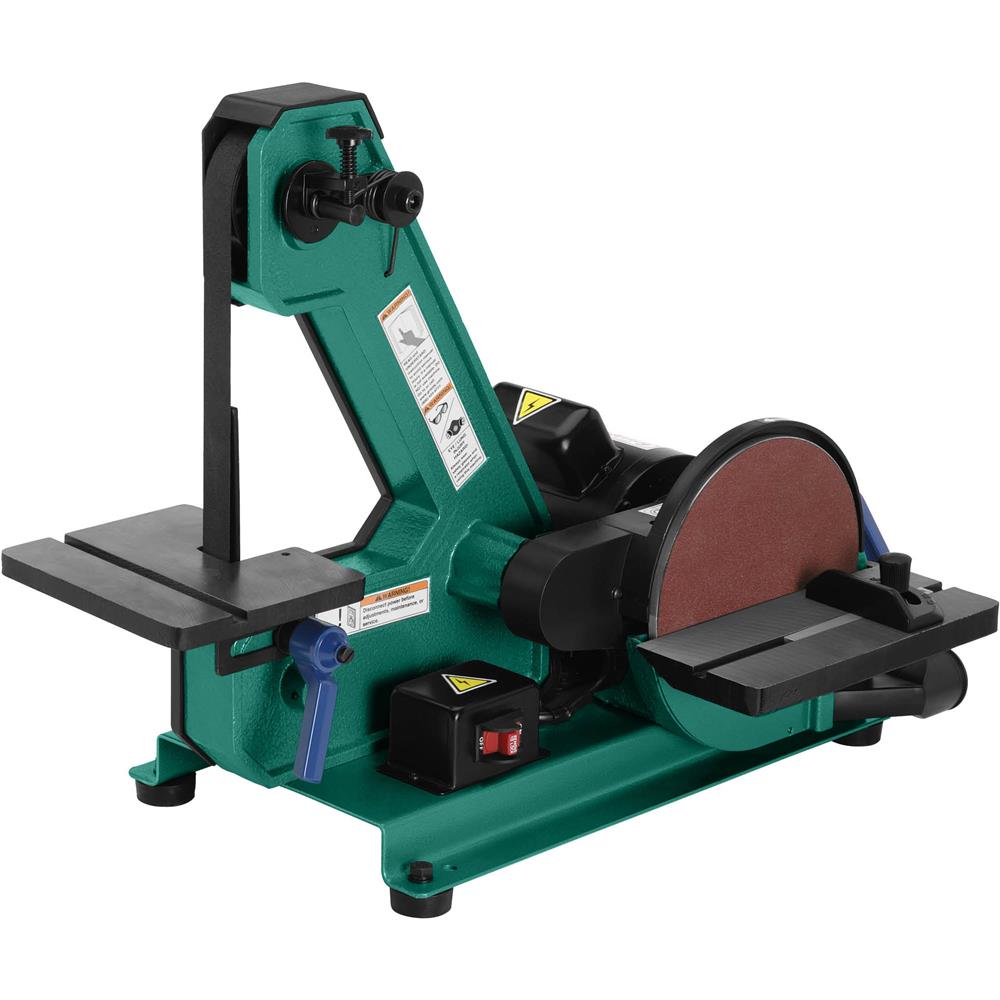
Grizzly H8192 1" x 42" Belt / 8" Disc Combo Sander
1x42 belt + 8" disc, compact
Shop at Grizzly.com →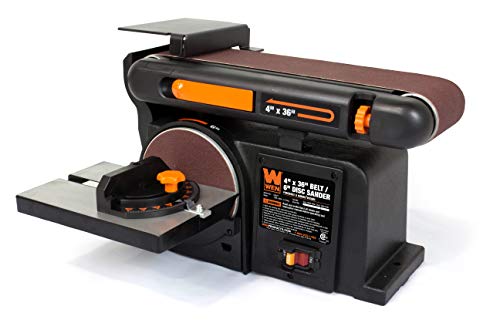
WEN Benchtop Belt and Disc Sander with 4 x 36 in. Belt, 6 in. Disc and Cast Iron Base (6502T)
Benchtop combo with a 4x36 belt, 6" disc, and cast-iron base.
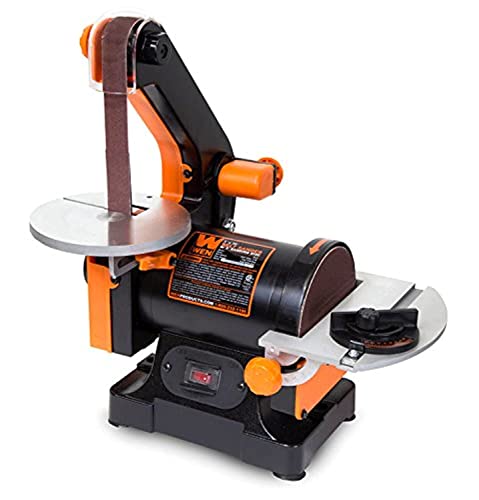
WEN Benchtop Belt and Disc Sander with 1 x 30 in. Belt and 5 in. Sanding Disc (6515T)
Compact benchtop combo with a 1x30 belt and 5" sanding disc.

JET 6" x 48" Belt & 12" Disc Sander, Benchtop, 1-1/2 HP, 115/230V 1Ph (JSG-6DC)
Open-stand shop sander with a 6x48 belt, 12" disc, and 1-1/2 HP motor.
Quick Comparison Table
| Model | Type | Budget | Best For |
|---|---|---|---|
| Grizzly G1014Z | 6x48 belt / 9" disc | See Grizzly | Best Overall Combo |
| Grizzly H8192 | 1x42 belt / 8" disc | See Grizzly | Best Compact Combo |
| WEN 6502T | 4x36 belt / 6" disc | Under $250 | Best Budget 4x36 |
| WEN 6515T | 1x30 belt / 5" disc | Under $100 | Best Compact 1x30 |
| JET JSG-6DCK | 6x48 belt / 12" disc | Under $2,500 | Best Premium 6x48 |
Belt & Disc Sander Buying Guide
Belt & Disc Sizes
The two headline numbers are belt dimensions and disc diameter. Belt width sets how wide an edge you can sand flat in one pass, and belt length affects how long the abrasive lasts and how easy it is to source replacements. Common sizes run from 1x30 and 1x42 for knife work and small parts, to 4x36 for general hobby woodworking, to 6x48 for shop-grade stock removal. Disc diameters typically pair up as 5", 6", 8", 9", or 12", a larger disc gives more surface for squaring end grain and truing miters before the abrasive dulls.
Table & Miter Gauge
The disc side lives or dies by its table. A flat, cast-iron table that tilts (usually 0 to 45 degrees) lets you sand bevels and chamfers accurately, and a miter gauge slot lets you hold stock square or at a set angle while you feed it into the down-rotating side of the disc. Look for a table that adjusts without excessive slop, a miter gauge included in the box, and a belt platen that can tilt vertical or horizontal for edge and end work.
Motor & Duty: Benchtop vs. Floor
Benchtop combo sanders use smaller universal or induction motors sized for intermittent hobby use; they are light, affordable, and clamp to a bench. Floor-standing and open-stand machines like a 1-1/2 HP 6x48 add mass and continuous-duty induction motors that resist bogging under heavy pressure and run all day. If you sand daily, work large boards, or push hard on metal, the added rigidity and motor duty are worth the price and footprint; for occasional small-parts work, a benchtop unit is plenty.
Planning a Sanding Station?
Compare drum sanders for thickness sanding wide panels and see where a combo belt/disc fits in your shop layout.
See the Best Drum Sanders →As an Amazon Associate and Grizzly Industrial affiliate, WorkshopCalc earns from qualifying purchases. Our picks are based on published specs and category research, not paid placement.