An edge sander presses a long abrasive belt against the edge of a board for fast, square, straight sanding, cleaning up saw marks, truing glued panels, and shaping curves against the exposed belt. The choice comes down to three things: the belt length and oscillation (a longer, up-and-down-moving belt spreads wear and leaves a smoother finish), the table and fence (flat, square, and adjustable so edges come off dead square), and the scale (benchtop for light work, floor-standing for production). Edge sanders sit alongside other shop sanders, so also see our best belt and disc sanders guide, our best oscillating spindle sanders guide for inside curves, and our best drum sanders guide for thicknessing wide panels. Below are our top edge sander picks for 2026, followed by a buying guide.
Best benchtop: the Grizzly G1531, a 6" x 80" benchtop edge sander for edge cleanup and smaller parts. Best oscillating: the Grizzly G0563, a 6" x 89" oscillating machine whose moving belt leaves a smoother, more even finish. Best for production: the Grizzly G0527 18" 5 HP wide-belt sander for feeding wide panels in volume. Prioritize a flat table, a square fence, and enough belt and power for the work you actually do.
Our Top Edge Sander Picks
Availability varies by production run; tap any button for current pricing and stock at Grizzly.com.
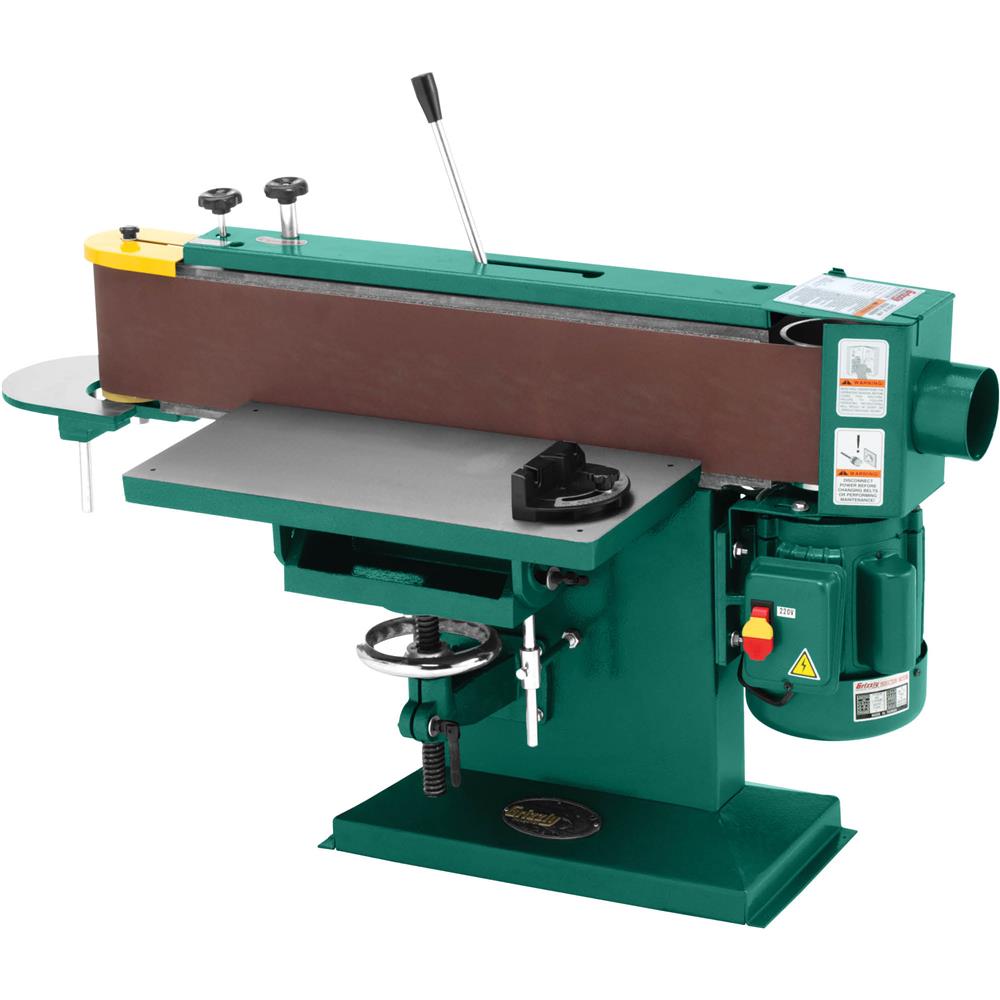
Grizzly G1531 6" x 80" Benchtop Edge Sander
6" x 80" belt, benchtop footprint for edge cleanup and smaller parts.
Shop at Grizzly.com →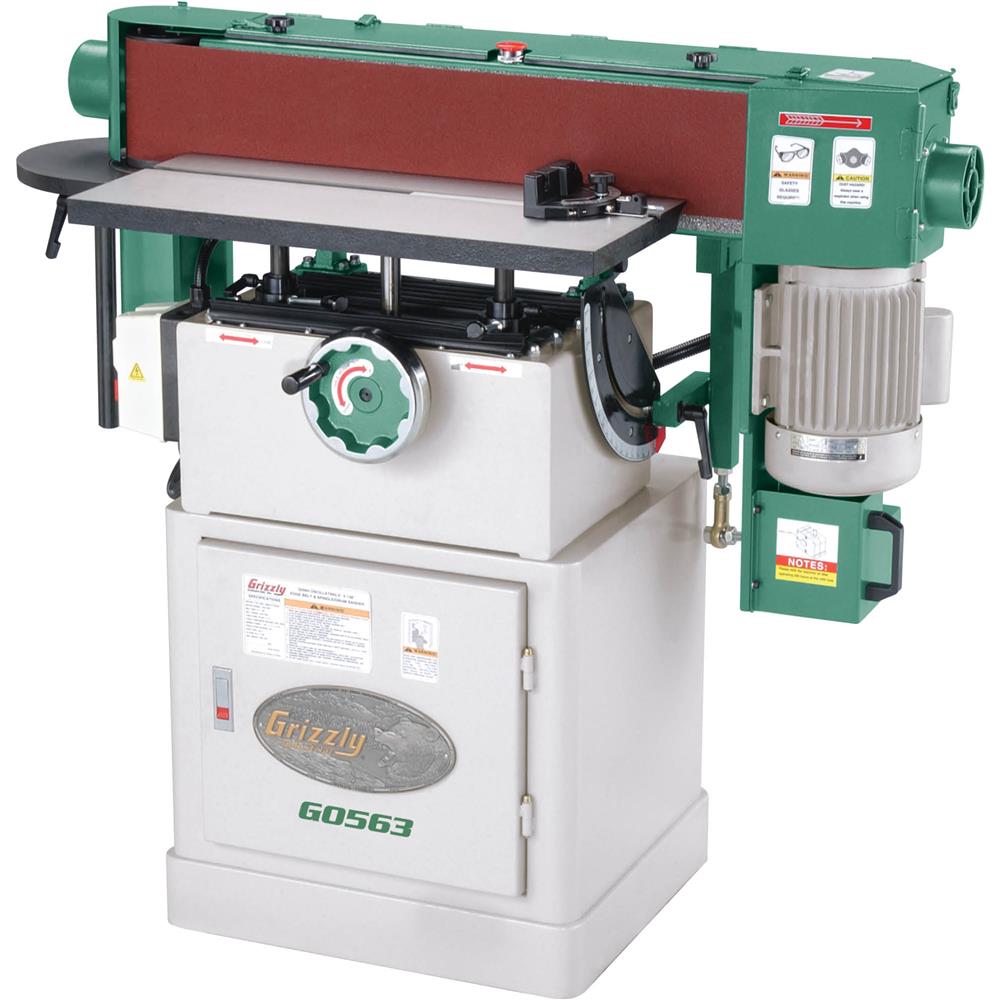
Grizzly G0563 6" x 89" Oscillating Edge Sander
6" x 89" belt with oscillation for even wear and a smoother finish.
Shop at Grizzly.com →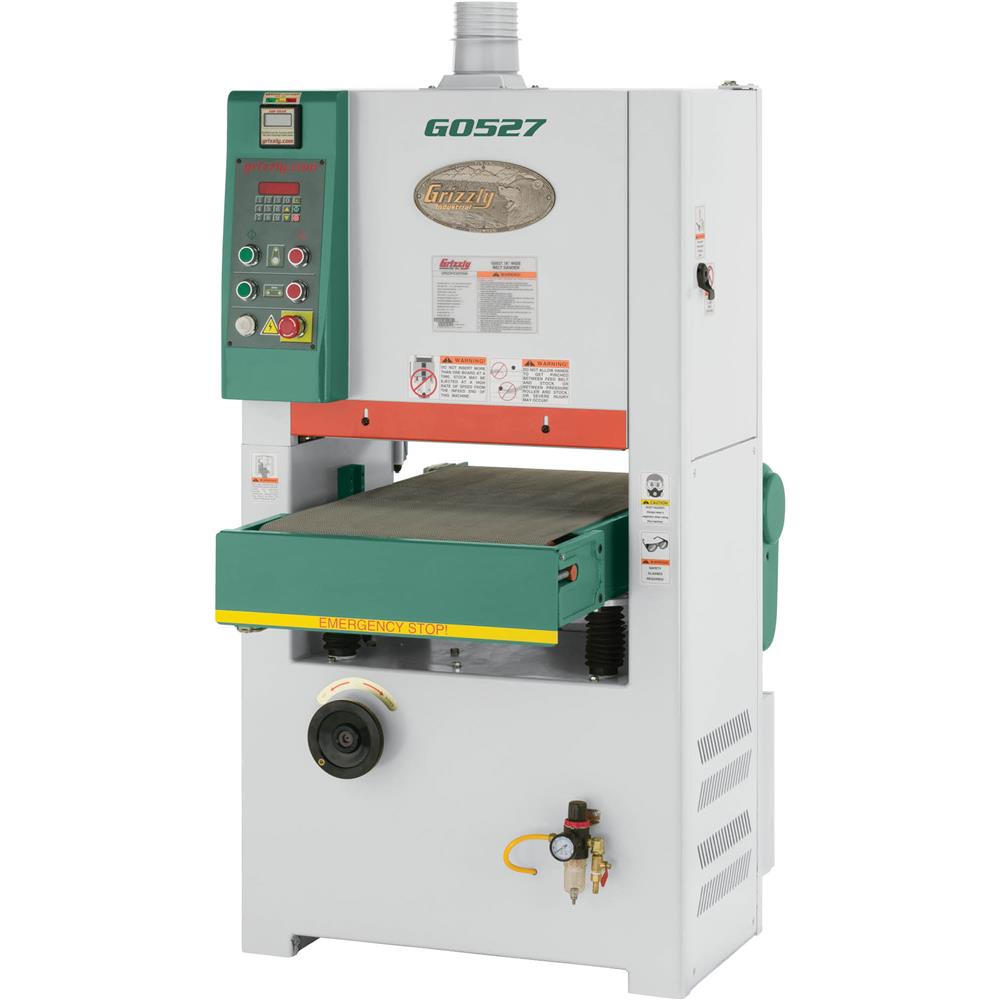
Grizzly G0527 18" 5 HP Wide-Belt Sander
18" wide belt, 5 HP motor, and floor-standing mass for production volume.
Shop at Grizzly.com →Edge Sanders Compared
Specs vary by production run; the table below summarizes each pick. Tap any product button above for live pricing.
| Model | Type | Budget | Best For |
|---|---|---|---|
| Grizzly G1531 | 6" x 80" benchtop | See Grizzly | Best Benchtop |
| Grizzly G0563 | 6" x 89" oscillating | See Grizzly | Best Oscillating |
| Grizzly G0527 | 18" 5 HP wide-belt | See Grizzly | Best for Production |
Edge Sander Buying Guide
Belt Length & Oscillation
The belt is the working surface of an edge sander, and a longer belt spreads the same job over more abrasive so it cuts cooler and lasts longer between changes. More important is oscillation: an oscillating edge sander moves the belt up and down as it runs, so no single row of grit stays fixed on one line of the workpiece. That constantly shifts the scratch pattern and distributes wear across the full width of the belt, which prevents the deep parallel streaks a stationary belt can leave and yields a smoother, more uniform finish. The same motion keeps the abrasive from loading and burning in one spot, extending belt life. If finish quality matters, oscillation is the single feature worth paying for.
Table & Fence for Square Edges
An edge sander is only as square as its table and fence. The worktable supports the face of the board while the fence, set at ninety degrees to the belt, references the edge so it meets the abrasive squarely. Look for a flat table that tilts for bevels and a fence that adjusts and locks solidly, so you can repeat a square edge or a set angle part after part. A larger, flatter table gives long or wide panels more support and less chance to rock, which is exactly what keeps the finished edge true from end to end.
Benchtop vs Floor for Production
Scale the machine to your volume. A benchtop edge sander is compact and affordable and handles occasional edge cleanup and smaller parts well. A floor-standing or wide-belt machine brings a longer belt, more motor power, a bigger table, and the mass to run all day without bogging down under continuous feeding. When edge or panel sanding becomes a bottleneck in a production shop, the larger machine pays back in speed and consistency; for a hobby or light-duty shop, a benchtop unit is usually all you need.
Round Out Your Sanding Bench
An edge sander pairs naturally with a combination belt and disc machine for faces and small parts. See our belt and disc picks.
See the Best Belt & Disc SandersAs a Grizzly Industrial affiliate, WorkshopCalc earns from qualifying purchases. Our picks are based on published specs and category research, not paid placement.
The machines these numbers point at
Board feet, cut lists and dust runs all assume a machine on the other end. These are the four that come up most across the calculators here.
 DEWALT DWS780 12 in Sliding Miter Saw
Double bevel sliding cut, the saw most shop layouts here are drawn around.
Check price on Amazon → DEWALT DW734 Benchtop Planer
Three-knife cutterhead, the cheapest route to dimensioning your own stock instead of paying for surfaced lumber.
Check price on Amazon → DEWALT DW618PK Router Kit
Fixed and plunge bases in one kit, which covers both table and handheld work without buying twice.
Check price on Amazon → Central Machinery 2 HP Dust Collector
Two horsepower at five micron, sized for a one-person shop rather than a shop vac pretending.
Check price on Amazon →As an Amazon Associate we earn from qualifying purchases, at no extra cost to you. Prices change, so check before buying.