7 Best Drum & Wide Belt Sanders 2026: Benchtop, Open-End & Production
A drum sander is the secret weapon of the serious woodworking shop. Where a thickness planer removes material fast, a drum sander delivers the silky-smooth, perfectly flat surfaces that glued-up panels and figured hardwoods demand. Whether you are flattening a dining table top, thinning delicate veneers, or sanding raised panel doors to a consistent thickness, this guide covers the best drum sanders for every shop size and budget in 2026. A drum sander flattens wide surfaces, but for shaping edges and smoothing smaller parts you will also want a combo machine, so see our guide to the best belt & disc sanders 2026.
For a benchtop-class shop, the Grizzly G0459 12 in 1-1/2 HP drum sander is the direct-buy pick; on Amazon the closest match is the VEVOR 10-inch benchtop drum sander.
Quick Picks: Our Top Recommendations
After researching specifications and verified owner feedback, these are our top drum sander picks across every category for 2026:
Prices change on Amazon. Amounts shown are planning estimates, not live quotes. Tap any button for current pricing.
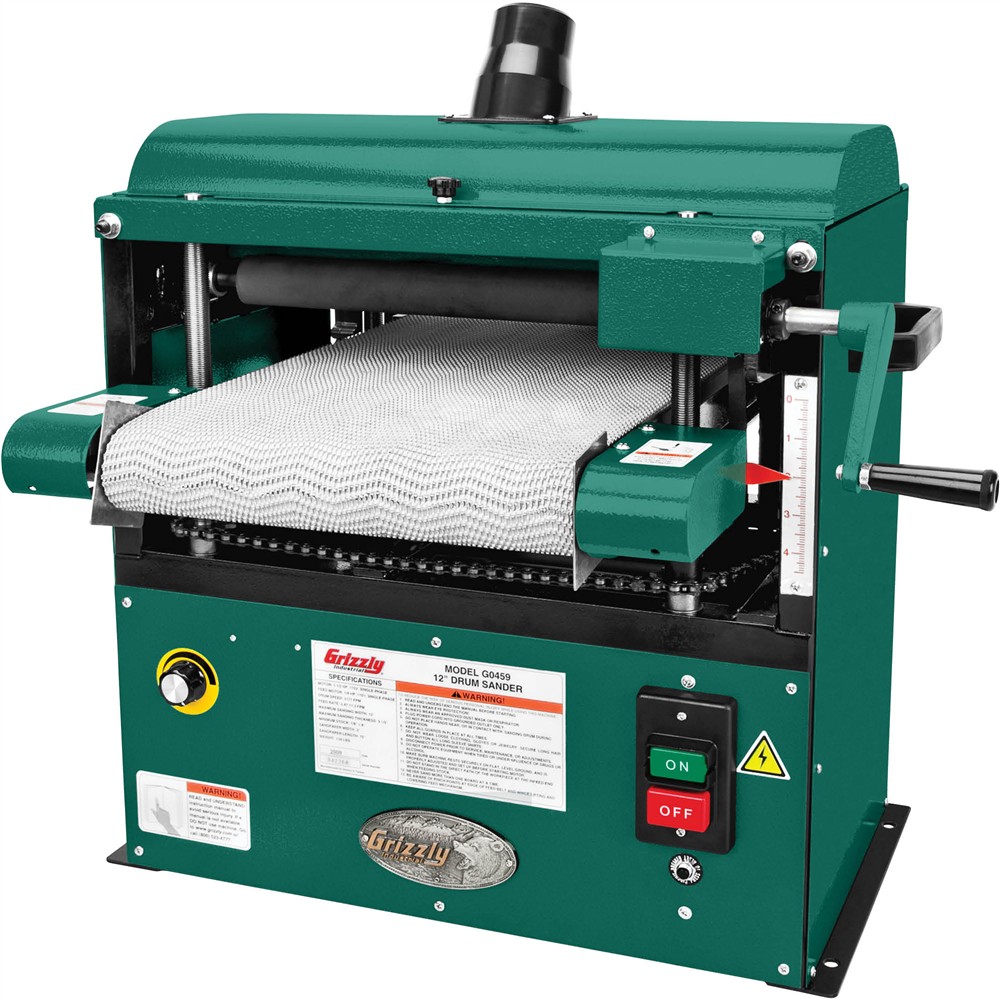
Prefer to buy direct? The Grizzly G0459 12" 1-1/2 HP Drum Sander is a strong drum sander from Grizzly Industrial, often priced lower factory-direct than through a reseller and backed by full parts availability and U.S. support.
Shop the G0459 at Grizzly.com →Product Comparison Table
Compare key specifications for all seven drum sanders at a glance:
| Model | Drum Width | Max Thickness | Motor HP | Feed Rate | Weight | Budget |
|---|---|---|---|---|---|---|
| JET JWDS-1632OSC Oscillating Drum Sander | 16" (32" open-end) | 1.5 HP | Up to 10 FPM | Under $2,500 | ||
| JET JWDS-2244 22-Inch Drum Sander | 22" (44" open-end) | 4" | 1.75 HP | 0-12 FPM | 205 lbs | Under $2,500 |
| JET JWDS-1632 16-Inch Drum Sander | 16" (32" open-end) | 3-1/2" | 1.5 HP | 0-8 FPM | 110 lbs | Under $2,500 |
| JET JWDS-2550 25-Inch Drum Sander | 25" (50" open-end) | 4" | 1.75 HP | 0-12 FPM | 192 lbs | $2,500+ |
| Powermatic PM2244 Drum Sander | 22" (44" open-end) | 4-1/2" | 1.75 HP | 0-20 FPM | 395 lbs | $2,500+ |
| VEVOR 10-Inch Benchtop Drum Sander | 10" | 3" | 1 HP | Variable | 80 lbs | Under $1,000 |
| JET JWDS-1836 18-Inch Drum Sander | 18" (36" open-end) | 4" | 1.75 HP | 0-15 FPM | 285 lbs | Under $2,500 |
| Grizzly G0459 12-Inch Drum Sander | 12" | See spec sheet | 1.5 HP | See spec sheet | See spec sheet | See Grizzly |
Detailed Reviews

JET JWDS-1632OSC Oscillating Drum Sander
Open-End OscillatingThe JET JWDS-1632OSC earns its Best Overall designation by adding drum oscillation to the proven 16-32 open-end platform. The drum oscillates three-quarters of an inch side to side as it sands, which reduces heat and scratch lines, and the open-end design extends effective capacity to 32 inches for tabletops and panels. SandSmart control monitors drum load and automatically regulates the conveyor speed so you cannot stall a pass.
Pros
- Oscillating drum reduces burn marks and scratch lines
- Open-end design handles panels up to 32" wide
- SandSmart load-monitoring conveyor control
- Infinitely variable feed up to 10 FPM
- Tool-free conveyor parallelism adjustment
- Integrated 4" dust collection channel
Cons
- 1.5 HP can bog in very dense hardwoods at full width
- Costs more than the non-oscillating JWDS-1632
- Open stand, no enclosed cabinet storage
Our Verdict
The JET JWDS-1632OSC is the drum sander we recommend to most woodworkers. The oscillating drum is a genuine finish-quality upgrade, the 16-32 open-end capacity covers most furniture and cabinet panels, and JET parts support is excellent. Step up to the JWDS-2244 only if you regularly sand panels wider than 32 inches.

JET JWDS-2244 22-Inch Drum Sander
Open-EndThe JET JWDS-2244 is the benchmark open-end drum sander for serious furniture and cabinet shops. The extra drum width and more powerful 1-3/4 HP motor give it a meaningful edge over smaller machines when you are regularly sanding wide panels and glued-up tops. JET backing and a long warranty add significant long-term value.
Pros
- Industry-leading 44" open-end panel capacity
- 1.75 HP motor handles full-width hardwood passes
- Precision depth stop for repeatable thickness sanding
- Ships with an open stand included
- Excellent JET warranty and dealer support
- Heavy-duty cast iron construction throughout
Cons
- Premium price over the JWDS-1632OSC
- Heavier weight requires permanent shop placement
- Longer lead times due to popularity
Our Verdict
If you regularly sand wide cabinet and furniture panels, the JET JWDS-2244 justifies its premium price with extra capacity and power. The precision depth stop makes thickness sanding to consistent dimensions far more reliable than guessing turns on an analog handwheel.

JET JWDS-1632 16-Inch Drum Sander
Open-EndThe JET JWDS-1632 brings true open-end drum sanding capability to a smaller, shop-friendly footprint. It handles two-pass sanding up to 32 inches and is the top pick for hobbyist shops, small crafts businesses, and woodworkers just adding drum sanding to their workflow for the first time. The included open stand makes it ready to run out of the crate.
Pros
- Affordable entry into JET open-end drum sanding
- Open-end design handles panels up to 32" wide
- 1.5 HP motor with an open stand included
- Good feed rate control for the price
- Available through major retailers including Amazon
Cons
- Modest power bogs in thick dense hardwoods at full width
- Smaller capacity than 22-inch and 25-inch machines
- Feed belt can slip with overly aggressive depth settings
- Limited to 3-1/2" maximum thickness
Our Verdict
The JET JWDS-1632 is the right drum sander for hobbyists and weekend woodworkers who want open-end capability in a compact machine. Respect its limits with light passes and it will serve a small shop reliably for years.

JET JWDS-2550 25-Inch Drum Sander
Open-EndThe JET JWDS-2550 delivers the widest open-end capacity in this guide at an effective 50 inches. JET builds this machine with a robust chassis, precision-machined drum, and the kind of overbuilt reliability the brand is known for. An excellent step up for shops that want maximum panel width with a single trusted nameplate.
Pros
- Largest open-end capacity at 50" effective width
- Robust steel and cast iron construction
- 1.75 HP motor with included open stand
- Excellent JET parts availability and support
- Variable feed conveyor with wide speed range
Cons
- Ships by freight, requires installation planning
- Heavy and needs a permanent floor location
- 1.75 HP is modest for 25" full-width passes in dense hardwood
Our Verdict
The JET JWDS-2550 is the pick for shops that need maximum open-end width. The 50-inch effective capacity covers any panel you are likely to build, and JET quality at this size is hard to match.

Powermatic PM2244 Drum Sander
Open-End ProductionThe Powermatic PM2244 is the professional standard for production furniture and cabinet shops. The 1-3/4 HP motor and 0-20 FPM variable feed rate allow a pace of production that smaller machines cannot match. Cast iron construction throughout, precision drum alignment, and Powermatic build quality make this machine a lifetime investment for serious shops.
Pros
- Smooth power delivery handles wide hardwood panels
- Variable feed up to 20 FPM for production throughput
- Cast iron construction minimizes vibration
- Powermatic warranty and support are best-in-class
- Precision depth adjustment with micro-increment control
- Superior dust collection hood and port design
Cons
- Highest price in the category
- Heavy weight (395 lbs) requires permanent placement
- Runs on 115V single phase, plan a dedicated circuit
- Overkill for hobby or occasional use
Our Verdict
The Powermatic PM2244 is the machine for professional shops where downtime is expensive and production volume is high. If you are running a furniture business or high-end cabinet shop, the PM2244 pays for itself in productivity and longevity. For hobby woodworkers, the JET JWDS-1632OSC or JET JWDS-2244 provides better value.

VEVOR 10-Inch Benchtop Drum Sander
BenchtopThe VEVOR 10-Inch Benchtop Drum Sander is the best compact drum sander for small workshops, craft rooms, and woodworkers with limited space. It sits on a sturdy bench and uses a dual-motor design with a variable-speed conveyor belt and a 4-inch dust port. Impressive capability for a machine this small and affordable relative to floor-standing open-end machines.
Pros
- Compact benchtop size fits any shop
- Dual-motor design with variable-speed conveyor
- 4-inch dust collection port built in
- Good value for small shop drum sanding capability
- In stock and ships ready to mount
Cons
- 1 HP motor requires light passes
- Limited to 3" maximum thickness
- 10-inch drum width is narrower than floor models
- Not suitable for high-volume or production work
Our Verdict
The VEVOR 10-Inch Benchtop Drum Sander is the right pick for small shops where floor space is scarce and project sizes are modest. It handles the drum sanding tasks most hobby woodworkers actually need, at a price and footprint that makes ownership practical.

JET JWDS-1836 18-Inch Drum Sander
18-Inch Open-EndThe JET JWDS-1836 fills the gap between compact 16-inch machines and the wide 22-inch and 25-inch JET sanders. The 18-inch drum with open-end design handles panels up to 36 inches in two passes, and the 1-3/4 HP motor with included open stand makes it a strong all-around shop machine for mid-size furniture work.
Pros
- Open-end design handles 36" panels in two passes
- 1.75 HP motor with included open stand
- Sized between compact and wide JET machines
- Variable speed conveyor for finish and stock-removal passes
- Strong JET parts and dealer support
- Cast iron table for flat, repeatable results
Cons
- Ships by freight and needs a dedicated floor spot
- Drum width narrower than 22-inch and 25-inch machines
- Premium over the compact JWDS-1632
- Heavy to reposition once installed
Our Verdict
The JET JWDS-1836 makes the most sense for shops that have outgrown a 16-inch machine but do not need the full width of the 22-inch or 25-inch sanders. The 18-inch open-end capacity covers most mid-size furniture panels with room to spare.

Photo via Unsplash
Drum Sander Buying Guide
Selecting the right drum sander requires matching the machine to your typical project size, production volume, and shop space. Here is what to consider before buying:
Frequently Asked Questions
What is the difference between a drum sander and a thickness planer?
A thickness planer removes material quickly with rotating cutters and is ideal for dimensioning rough lumber. A drum sander removes material slowly with abrasive paper and excels at final smoothing, flattening glued-up panels, and working with figured or difficult grain that would tear out under planer knives. Most serious woodworking shops benefit from having both.
What does open-end drum sander mean?
An open-end drum sander has the conveyor belt and drum extending past the end of the machine frame on one side. This allows you to pass a panel through twice, once for each half, effectively doubling the maximum panel width the machine can handle. A 22-inch open-end machine can sand panels up to 44 inches wide using this two-pass method.
What grit sandpaper should I use in a drum sander?
Start with 60-80 grit for initial flattening of rough or glued-up panels. Move to 100-120 grit for intermediate smoothing. Finish with 150-180 grit for final surface preparation before finishing. Never skip more than one grit size, and always sand with the grain. Change paper frequently, dull abrasive creates heat and glazes the wood surface.
How much material can a drum sander remove per pass?
A drum sander should remove no more than 1/32 inch (about 0.8mm) per pass. Aggressive cuts cause the motor to bog down, create heat that burns the wood surface, and wear out sandpaper rapidly. For heavy stock removal, make multiple light passes, lowering the drum slightly between each pass. This approach is faster in practice because you avoid stalling and restarting.
Do I need dust collection for a drum sander?
Yes, dust collection is essential for drum sander operation. Drum sanders produce extremely fine sanding dust that poses serious respiratory hazards and creates fire risk from accumulated heat. Connect a dust collector rated for at least 400 CFM to your drum sander. Many woodworkers add a cyclone separator upstream to capture the fine dust before it reaches the main collector bag.
Related Calculators and Resources
Use these tools to plan your drum sander setup and workflow:
As an Amazon Associate and Grizzly Industrial affiliate, WorkshopCalc earns from qualifying purchases. Our recommendations are based on research into specifications, pricing, and verified owner reviews, not hands-on testing. We only recommend products we believe provide genuine value to woodworkers.