Both machines are benchtop mills, but they are built for different scales of work. A mini mill is compact and light, made for small hobby parts and tight bench space, while a mill-drill brings a bigger table, more travel, and a stiffer column for heavier stock and deeper cuts. This page compares size, capacity, rigidity, and cost so you can match the machine to the work. For full model roundups, see our best benchtop milling machines guide and best metal lathes guide.
A mini mill is compact and light, ideal for small hobby parts, light cuts, and shops short on bench space. A mill-drill has a bigger table, more travel, and more rigidity, so it handles heavier workpieces and deeper cuts. Pick by part size, the rigidity your cuts demand, and how much bench space you can give up: small parts and tight space favor a mini mill, while larger work and heavier cutting favor a mill-drill.
At a Glance: Mini Mill vs Mill-Drill
Here is how the two machines stack up on the factors that matter most when choosing a benchtop mill.
| Factor | Mini Mill | Mill-Drill |
|---|---|---|
| Size / Weight | Compact and light; fits a small bench and is easier to move | Larger and much heavier; needs a sturdy bench or stand |
| Table & Travel | Small table with short X and Y travel for small parts | Wider table with longer travel for bigger workpieces |
| Rigidity | Lighter column; best for light cuts in soft metals | Heavier column and more mass; handles deeper, harder cuts |
| Best For | Small hobby parts, models, and light-duty work | Larger parts, heavier stock, and more demanding cuts |
| Price Range | Lower entry cost for a first benchtop mill | Higher cost for more capacity and rigidity |
Two Machines to Consider
Both of these ship factory-direct from Grizzly Industrial, with full parts availability and U.S. support. Specs vary by production run, so tap through for current details and pricing.
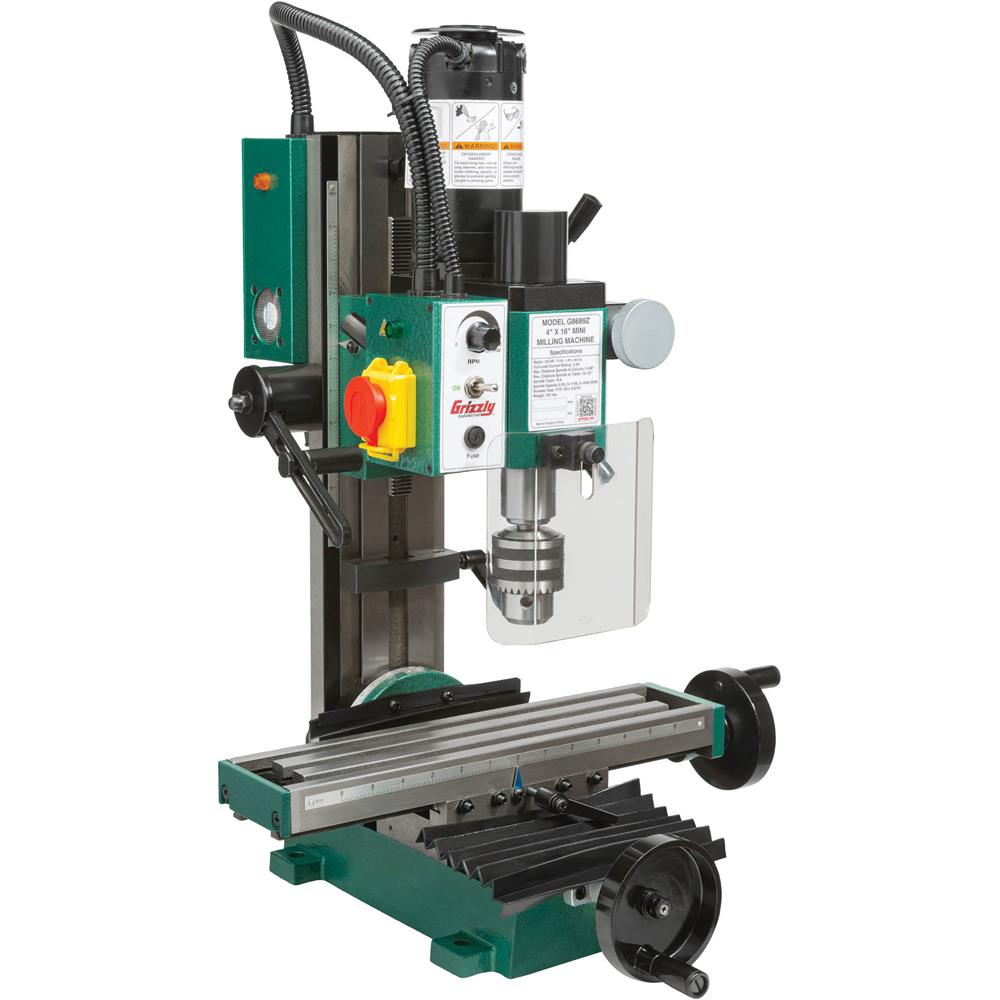
Grizzly G8689Z 4" x 16" Mini Milling Machine
A compact benchtop mill with a small table and light footprint, built for small hobby parts and light-duty cuts in soft metals.
Shop at Grizzly.com →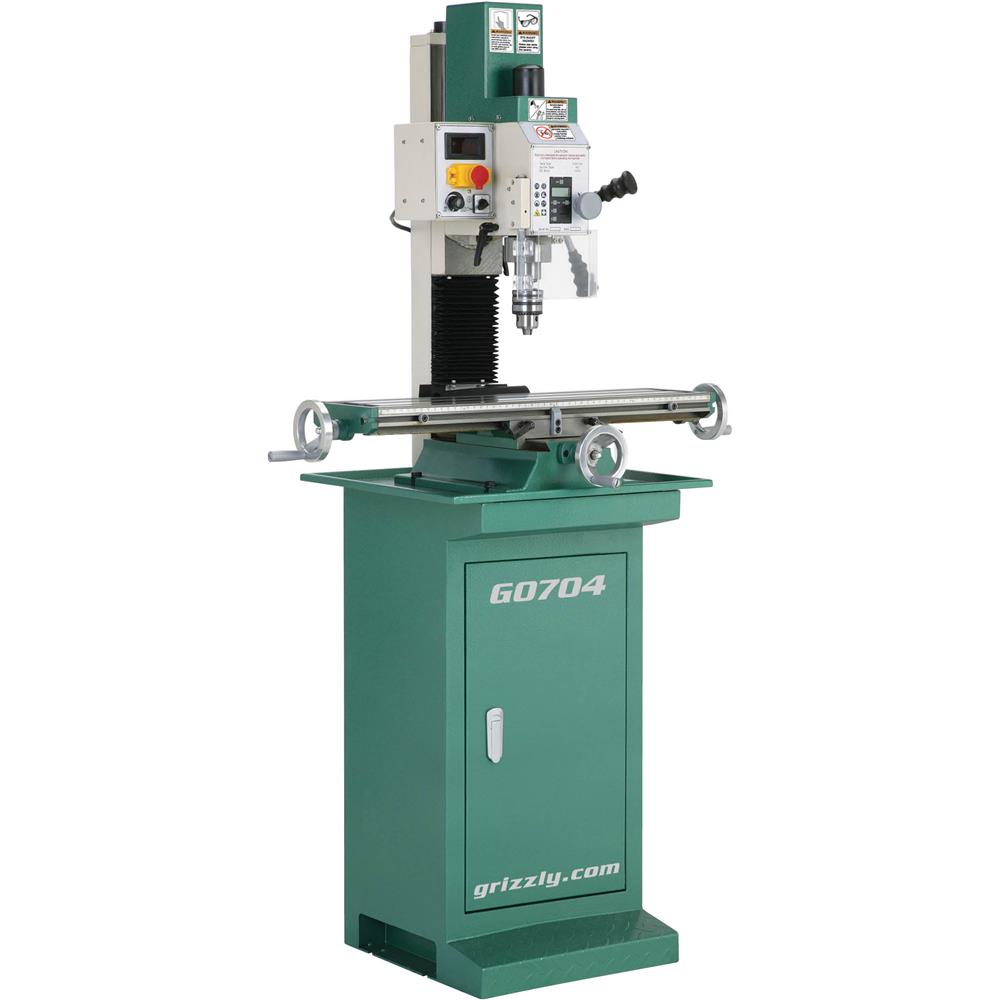
Grizzly G0704 7" x 27" 1 HP Mill/Drill with Stand
A larger 1 HP mill/drill with a wider table, more travel, and a heavier column, shipped with a stand for heavier stock and deeper cuts.
Shop at Grizzly.com →Choose a Mini Mill If
- Your parts are small: models, hobby projects, and light components in aluminum, brass, or soft steel.
- You are limited on bench space and want a compact machine you can move without help.
- You want a lower-cost entry point into benchtop milling to learn on.
- Your cuts are light and you do not need to hog out heavy stock.
- You value portability and a small footprint over maximum capacity.
Choose a Mill-Drill If
- You work with larger parts that need a wider table and longer X and Y travel.
- You take deeper or heavier cuts and need the rigidity of a stiffer, heavier column.
- You want one machine that can both mill and drill to save bench space.
- You have a sturdy bench or the included stand and can accommodate the extra weight.
- You are willing to spend more for added capacity, mass, and a better surface finish.
Ready to Buy a Benchtop Mill?
See our full roundup of benchtop milling machines, ranked by table size, travel, rigidity, and value.
Read the Best Benchtop Mills GuideAs an Amazon Associate and Grizzly Industrial affiliate, WorkshopCalc earns from qualifying purchases. Our picks are based on published specifications and category research, not paid placement.
The machines these numbers point at
Board feet, cut lists and dust runs all assume a machine on the other end. These are the four that come up most across the calculators here.
 DEWALT DWS780 12 in Sliding Miter Saw
Double bevel sliding cut, the saw most shop layouts here are drawn around.
Check price on Amazon → DEWALT DW734 Benchtop Planer
Three-knife cutterhead, the cheapest route to dimensioning your own stock instead of paying for surfaced lumber.
Check price on Amazon → DEWALT DW618PK Router Kit
Fixed and plunge bases in one kit, which covers both table and handheld work without buying twice.
Check price on Amazon → Central Machinery 2 HP Dust Collector
Two horsepower at five micron, sized for a one-person shop rather than a shop vac pretending.
Check price on Amazon →As an Amazon Associate we earn from qualifying purchases, at no extra cost to you. Prices change, so check before buying.