7 Best Metal Lathes 2026: Benchtop, Gunsmithing & Full-Size Shop Lathes
Updated 20265,100+ words20 min read
A metal lathe is the foundational machine of any serious home machine shop. From turning custom bolts and bushings to gunsmithing barrel work and producing precision components, the right lathe determines what you can make. This guide reviews the seven best metal lathes of 2026, from a $509 mini lathe to a $3,349 lathe and mill combo, so you can find the right lathe for your skill level, space, and work. To round out the shop, pair your lathe with one of the best benchtop milling machines 2026 for flats, slots, and holes, and cut your stock to length first with one of the best metal-cutting bandsaws 2026.
Quick Picks: Our Top Recommendations
After evaluating metal lathes across home shops, gunsmithing benches, and production environments, these are our top picks for 2026:
Prices change on Amazon. Amounts shown are planning estimates, not live quotes. Tap any button for current pricing.
Shopping for the person who uses this page? A bench lathe is the big gift for a machinist, with Starrett and Mitutoyo measuring tools in the mid tier. Start with our gifts for machinists and metalworkers, or see the best gifts for woodworkers; every pick is a specific stocked model, ranked from the big machines down to stocking stuffers.
Product Comparison Table
Compare key specifications across all seven metal lathes at a glance:
Model
Swing
Between Centers
Spindle Bore
Motor HP
Weight
Budget
Detailed Reviews
Photo via Unsplash
Metal Lathe Buying Guide
Choosing the right metal lathe means matching machine size, precision, and features to your actual work. Here is what matters most:
Lathe Size: Swing and Between Centers
Mini Lathes (7x10 to 7x14)
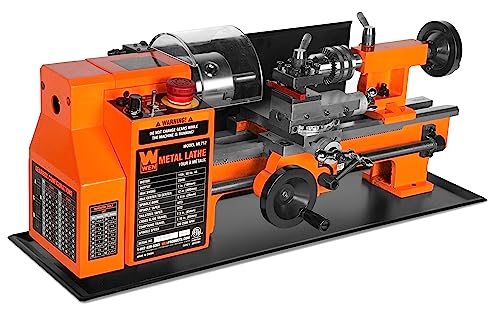
Maximum 7-inch swing and 14-inch capacity. Best for model engineering, small parts, and learning fundamentals. Inexpensive to own but limited: cannot turn large or long workpieces. Popular for watchmaking, jewelry, and electronic component work.
Benchtop Lathes (9x20 to 10x22)
The sweet spot for most home machinists. Handles automotive parts, bushings, shafts, and most hobby work. Fits on a sturdy bench or dedicated stand. The Grizzly G4000 and VEVOR 8x16 live here and represent the best balance of capability and footprint.
Full-Size Lathes (13x40 and larger)
Required for gunsmithing barrel work, longer shafts, and production parts. Typically floor-standing, very heavy, and require 240V power. Best for serious machinists with dedicated shop space and specific projects that exceed benchtop lathe capacity.
Spindle Bore
Spindle bore determines what stock you can pass through the headstock for turning:
3/4-inch bore: Common on small benchtop lathes. Limits bar-through work to 3/4-inch diameter stock.
3/4-inch to 1-inch bore: Handles most common round bar stock and small barrel blanks. Most benchtop lathes in this guide, including the Grizzly G4000 and VEVOR machines, sit in this range.
1.5-inch bore: Standard on full-size machines. Accommodates most rifle barrel blanks without outside support.
2.5-inch bore: Industrial lathes only. Required for large-diameter tube stock and specialized applications.
Gunsmithing Tip
If gunsmithing is a primary purpose, prioritize spindle bore over swing. A 1.5-inch bore lets you pass a #1 contour rifle barrel blank through the headstock for threading, crowning, and chamber work without needing a barrel vise.
Headstock and Speed Range
Spindle speed range determines what materials and operations you can perform:
Low speed (50-500 RPM): Large-diameter turning, threading, knurling, and heavy cuts. Essential for anything over 4 inches in diameter.
Mid range (500-1,500 RPM): General turning of steel, aluminum, and brass in typical diameters.
High speed (1,500-3,000+ RPM): Small-diameter work, finishing passes, and non-ferrous materials like aluminum and plastics.
Variable-speed (VS) electronic speed control is a significant convenience advantage over gear-change lathes for frequent speed adjustments during a job.
Carriage, Cross-Slide, and Lead Screw
The carriage system determines how precise your threading and turning will be:
Lead screw accuracy: Better lathes have hardened and precision-ground lead screws. Look for less than 0.001-inch per foot lead screw error for precision work.
Quick-change gearbox: Allows setting thread pitch and feed rate with levers rather than changing gear sets. Standard on quality benchtop and all full-size lathes.
Carriage lock: Locks the carriage for facing operations. Often missing on cheap lathes; critical for accurate face work.
Compound rest: Allows angled cuts for tapers and chamfers. Quality of the compound rest affects surface finish on taper cuts.
Weight and Rigidity
Lathe weight directly correlates with rigidity, vibration damping, and surface finish:
Under 200 lbs: Mini and small benchtop lathes. Requires a very sturdy bench and can still vibrate at high speeds or heavy cuts.
200-400 lbs: Quality benchtop lathes. The VEVOR 8.3x29.5 at 209 lbs and Grizzly G0769 combo at 320 lbs are in this range.
400-800 lbs: Full-size benchtop and smaller floor-standing lathes. Significantly better finish and chatter resistance.
800 lbs+: Serious floor-standing industrial machines. Industrial rigidity for production work.
When a part needs a dead-flat, precision-ground face that a lathe simply cannot turn, a dedicated surface grinder becomes the next machine to add to the shop; our best surface grinders 2026 guide covers the options.
🔗 Finishing lathe parts? A bench buffer brings turned steel and brass to a mirror polish.
As an Amazon Associate and Grizzly Industrial affiliate, WorkshopCalc earns from qualifying purchases. Our recommendations are based on research into specifications, pricing, and verified owner reviews, not hands-on testing. We only recommend products we believe provide genuine value to machinists and home shop users.