A surface grinder removes tiny amounts of metal to bring a face dead flat, smooth, and precisely to size, the finishing step a mill or file cannot reach. The choice comes down to three things: the table travel and capacity (the largest part you can grind in one setup), the magnetic chuck and wheel (how the work is held and abraded), and the machine's precision, rigidity, and coolant (so the wheel tracks true in ten-thousandths of an inch). Pair a grinder with the right upstream machines: rough parts to size on one of our best metal lathes, square them up on a benchtop milling machine, then dial in cut rates with our feeds and speeds reference. Below are our top surface grinder picks for 2026, followed by a buying guide.
Best value with a stand: the Grizzly G5963, a 6" x 12" surface grinder that ships factory-direct on its own stand. Best compact: the Grizzly G3104 6" x 18", a longer table in a bench-friendly footprint. Best larger capacity: the Grizzly G3155 8" x 20" for longer and wider parts. Prioritize a rigid base and a good magnetic chuck over headline table size.
Our Top Surface Grinder Picks
Prices vary by production run and retailer; tap any button for current factory-direct pricing.
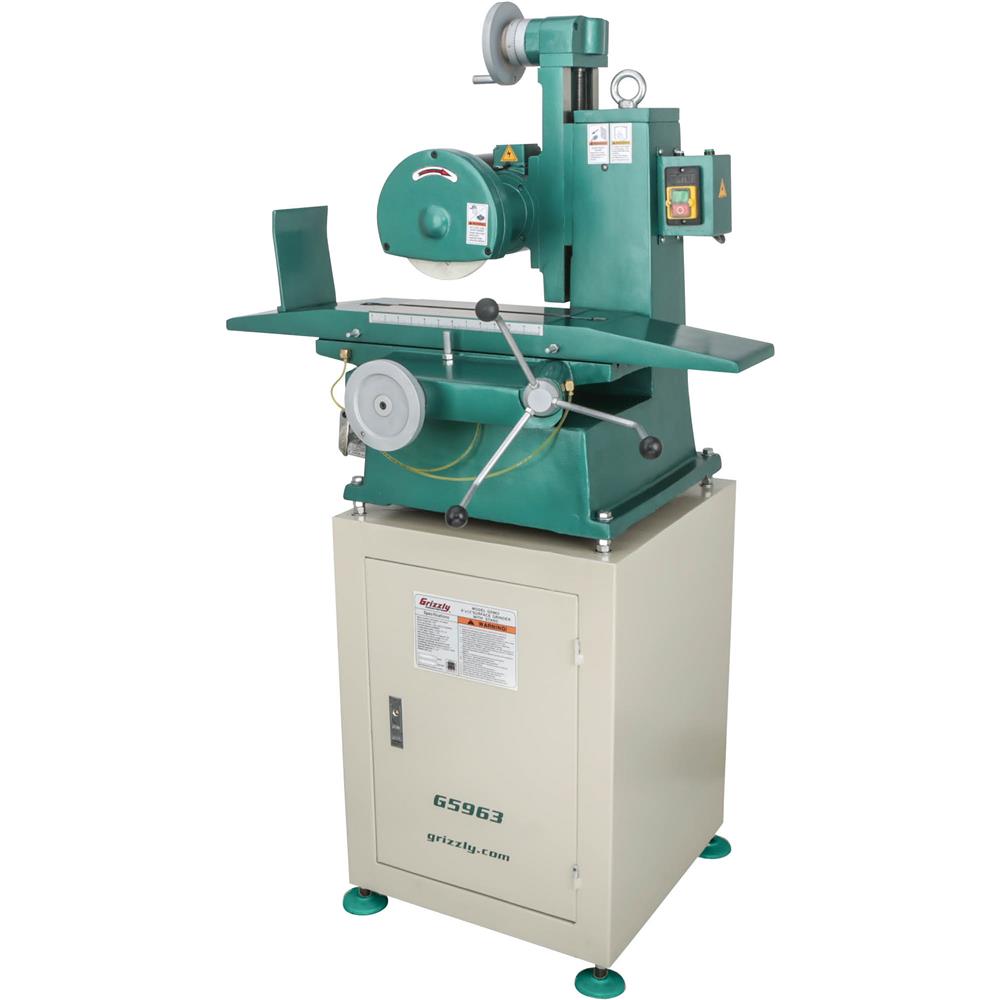
Grizzly G5963 6" x 12" Surface Grinder with Stand
6" x 12" table, ships factory-direct on its own stand.
Shop at Grizzly.com →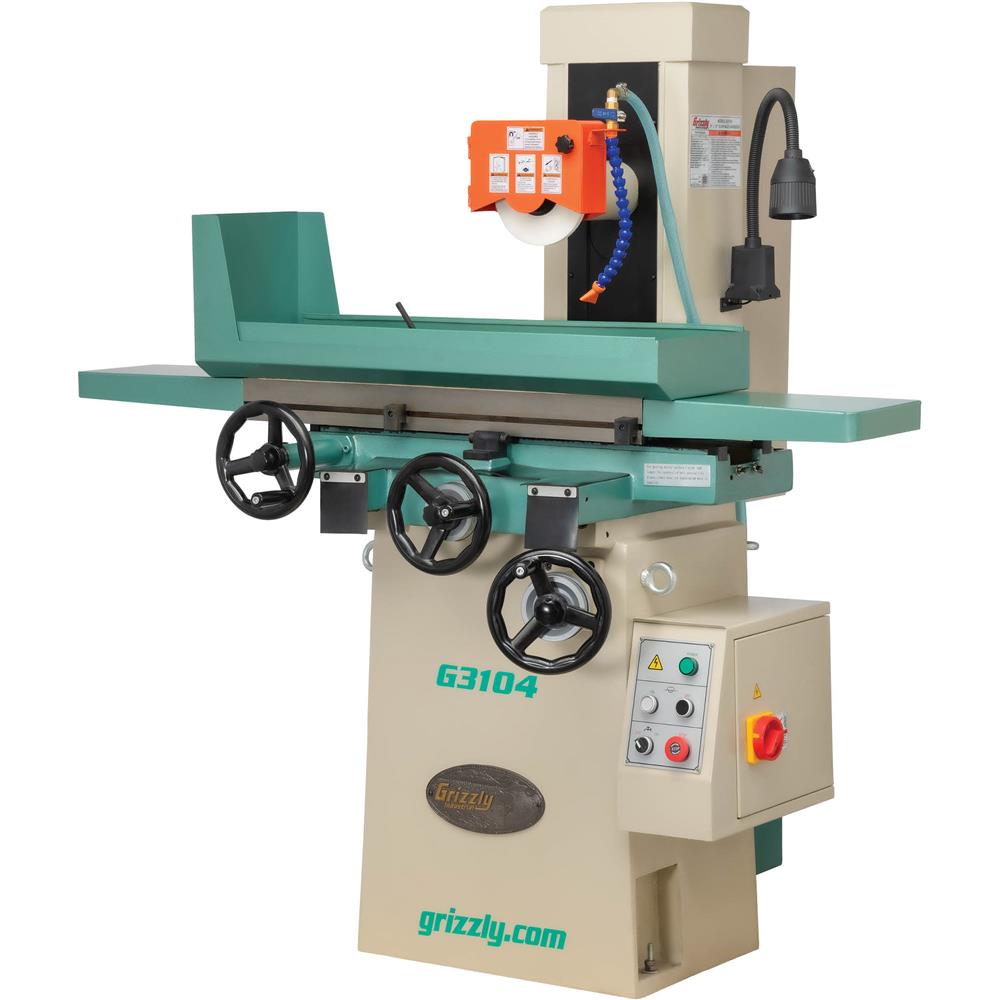
Grizzly G3104 6" x 18" Surface Grinder
6" x 18" table, a longer travel in a bench-friendly footprint.
Shop at Grizzly.com →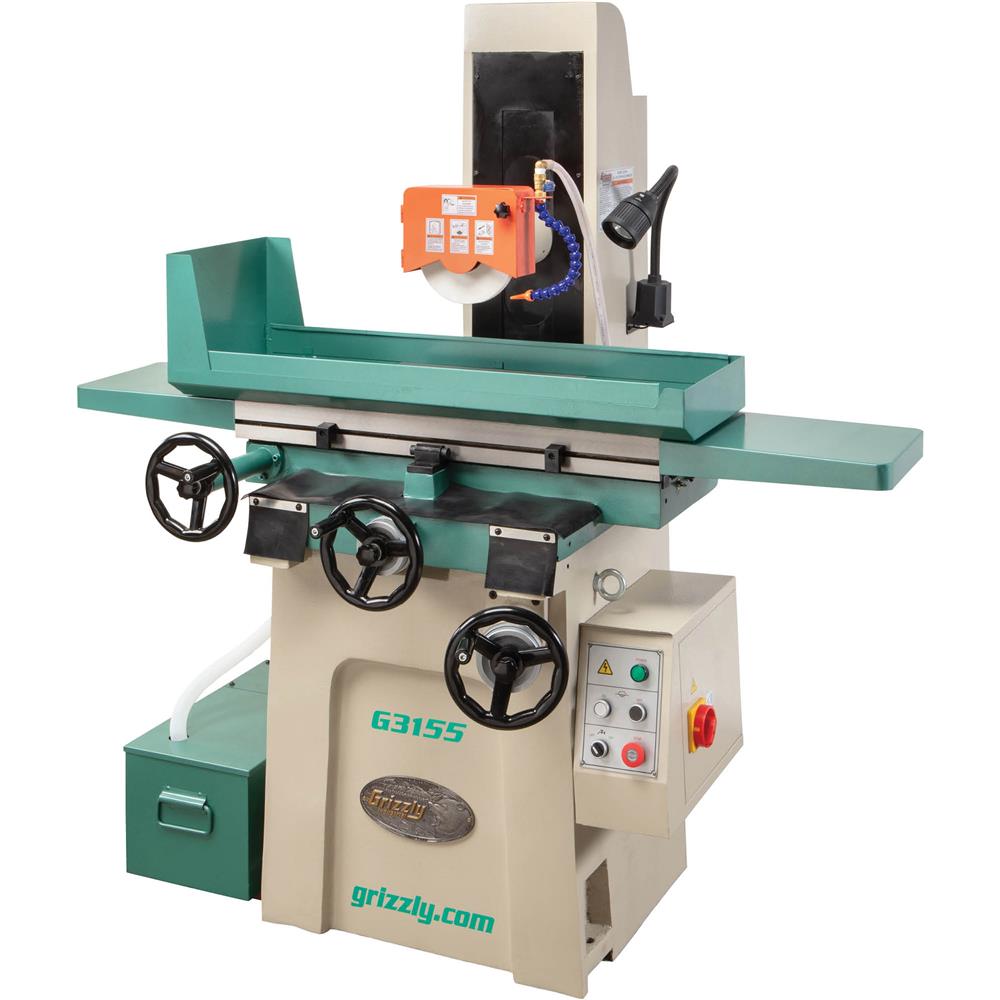
Grizzly G3155 8" x 20" Surface Grinder
8" x 20" table for longer and wider parts.
Shop at Grizzly.com →Surface Grinders Compared
Prices change often and these are factory-direct machines; tap any product button above for live pricing.
| Model | Table Size | Budget | Best For |
|---|---|---|---|
| Grizzly G5963 | 6" x 12", with stand | See Grizzly | Best Value with Stand |
| Grizzly G3104 | 6" x 18" | See Grizzly | Best Compact |
| Grizzly G3155 | 8" x 20" | See Grizzly | Best Larger Capacity |
Surface Grinder Buying Guide
Table Travel & Capacity
A surface grinder is sized by its table travel, the 6 by 12, 6 by 18, or 8 by 20 inch figure that sets the largest part you can grind in a single setup. Longitudinal travel controls how long a piece you can pass fully under the wheel, while cross travel controls its width, so a longer table like the 6 by 18 buys reach without a wider footprint. For hobby, tool, and die work a 6 by 12 or 6 by 18 machine covers most parts and fits on a bench or compact stand; step up to an 8 by 20 only when you routinely grind longer or wider stock, since the bigger machines demand more floor space and budget.
Magnetic Chuck & Wheel
The magnetic chuck is how the work gets held: it grips a flat ferrous part instantly with no clamps to foul the wheel, which is why it is the standard fixture on these machines. Permanent-magnet chucks need no power and are simple to live with, while electromagnetic chucks give stronger, switchable holding for heavier cuts; non-magnetic metals like aluminum or brass need mechanical fixturing instead. The grinding wheel does the cutting, so match its grit and bond to the material and finish you want, keep it dressed true, and mount it carefully, a well-balanced, freshly dressed wheel is what turns table travel into a mirror-flat face.
Precision, Rigidity & Coolant
Surface grinders work in ten-thousandths of an inch, so any flex, vibration, or slop in the ways shows up directly as a wavy or uneven finish. A heavy cast-iron base, precision-ground ways, and a well-supported wheel head keep the wheel tracking true across the whole part, which is why rigidity matters more than headline table size. Coolant earns its keep on many jobs too: flood or spray coolant flushes swarf out of the cut and keeps the workpiece from heating up and expanding, so the dimension you just ground still holds once the part cools. Prioritize a rigid, well-built machine and a good chuck, and the precision follows.
Feed It the Right Numbers
Grinding is only as good as the setup ahead of it. Dial in cut rates for every machine in your shop with our feeds and speeds reference.
Open the Feeds & Speeds ReferenceAs an Amazon Associate and Grizzly Industrial affiliate, WorkshopCalc earns from qualifying purchases. Our picks are based on published specs and category research, not paid placement.
The machines these numbers point at
Board feet, cut lists and dust runs all assume a machine on the other end. These are the four that come up most across the calculators here.
 DEWALT DWS780 12 in Sliding Miter Saw
Double bevel sliding cut, the saw most shop layouts here are drawn around.
Check price on Amazon → DEWALT DW734 Benchtop Planer
Three-knife cutterhead, the cheapest route to dimensioning your own stock instead of paying for surfaced lumber.
Check price on Amazon → DEWALT DW618PK Router Kit
Fixed and plunge bases in one kit, which covers both table and handheld work without buying twice.
Check price on Amazon → Central Machinery 2 HP Dust Collector
Two horsepower at five micron, sized for a one-person shop rather than a shop vac pretending.
Check price on Amazon →As an Amazon Associate we earn from qualifying purchases, at no extra cost to you. Prices change, so check before buying.