A slip roll turns flat sheet metal into cylinders, cones, and smooth radius bends by feeding it through three adjustable rollers. The choice comes down to three things: the roll width and gauge capacity (how wide a sheet and how thick a gauge you can form), the rear-release and wire-forming features (a top roll that opens to slip a closed cylinder off, plus grooves for wired edges and angled setups for cones), and the drive (hand-crank simplicity versus powered output for production). Slip rolls sit alongside brakes and shears in a metal shop, so if you are building out a bench see our best sheet metal machines guide, and pair rolled seams with our best welders guide when you need to close them. For a full bench layout, our metalworking shop setup guide shows how the pieces fit together. Below are our top slip roll picks for 2026, followed by a buying guide.
Best compact shop roll: the Grizzly T21318, a 36-inch, 22-gauge slip roll, factory-direct. Best wider capacity: the Grizzly T32718 41-inch slip roll. Best benchtop value: the KAKA Industrial SJ-320, a 12.6-inch, 22-gauge hand roll with a removable roller. Best budget: the Erie Tools 12-inch bench-mount roller. Prioritize the roll width and gauge you actually need, plus a rear-release for closed cylinders, over extra reach.
Our Top Slip Roll Picks
Prices vary by production run and retailer; treat the figures below as planning estimates and tap any button for current pricing.
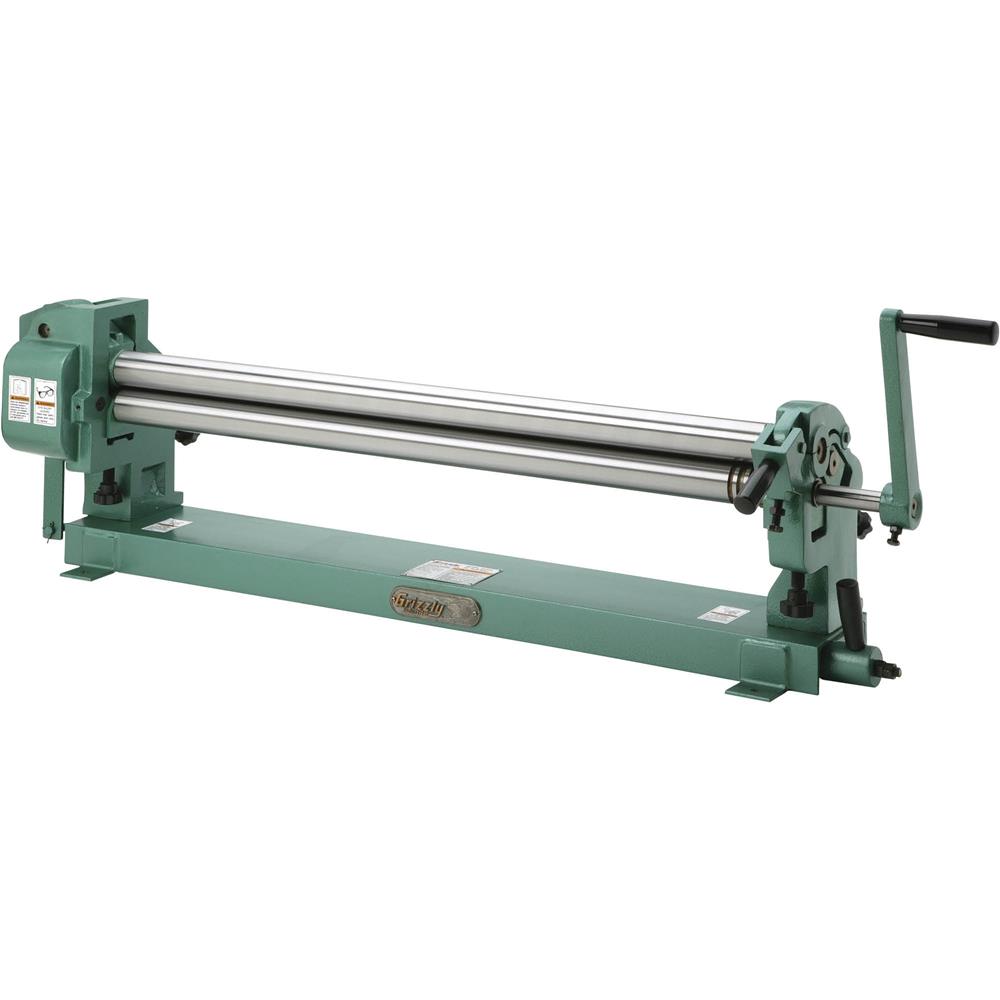
Grizzly T21318 36" Slip Roll, 22-Gauge
36-inch roll width, 22-gauge capacity, hand-crank slip roll
Shop at Grizzly.com →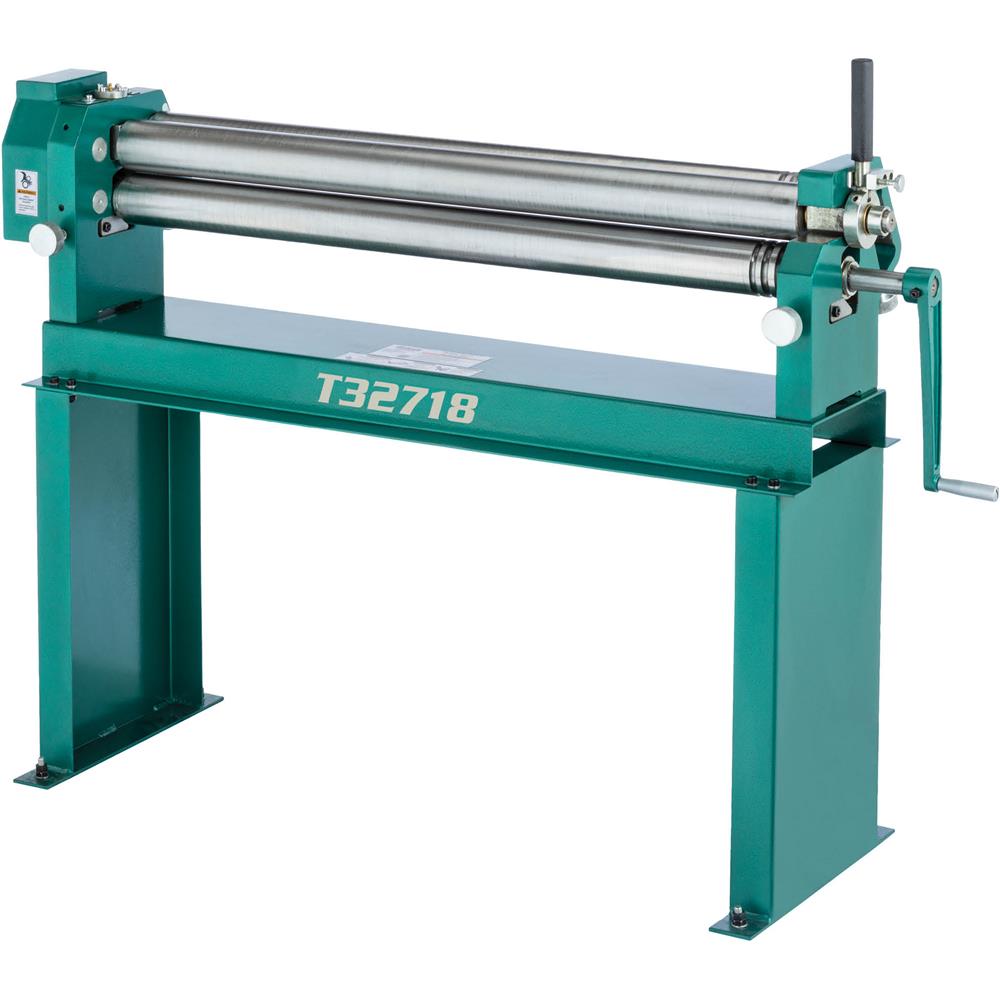
Grizzly T32718 41" Slip Roll
41-inch roll width for wider sheet metal work
Shop at Grizzly.com →
KAKA INDUSTRIAL Slip Roll Machine, 12.6 inch Forming Width in 22 Gauge (0.03 Inch) Capacity Sheet Metal Roller, with a Removable Roller, Slip Roller Bending Machine SJ-320
12.6-inch benchtop slip roll, 22-gauge capacity, removable roller.

Erie Tools 12-Inch Sheet Metal Slip Roll Machine Manual Roller Bender for Cylinders Reverse Curves and Radius Bends 22-Gauge Capacity Bench Mount Design
12-inch manual slip roll for cylinders, reverse curves, and radius bends, 22-gauge capacity, bench mount.
Slip Rolls Compared
Prices change often; the figures below are approximate. Tap any product button above for live pricing.
| Model | Type | Budget | Best For |
|---|---|---|---|
| Grizzly T21318 | 36" hand slip roll | See Grizzly | Best Compact |
| Grizzly T32718 | 41" slip roll | See Grizzly | Best 41-Inch |
| KAKA SJ-320 | 12.6" benchtop roll | Under $250 | Best Benchtop Value |
| Erie Tools 12" | 12" bench-mount roll | Under $250 | Best Budget 12-Inch |
Slip Roll Buying Guide
Roll Width & Gauge Capacity
The two ratings that define a slip roll are its roll width and its gauge capacity. Roll width is the widest sheet you can feed edge-on between the rollers, which sets the length of the seam or the height of the cylinder you can form in one pass. Gauge capacity is the thinnest gauge, meaning the highest number, that the machine can bend at full width in mild steel; a 22-gauge rating is common on benchtop and light shop rolls. Remember that capacity falls as material gets harder or the sheet gets wider, so a machine rated for 22-gauge at 12 inches may struggle with the same gauge at full width in stainless. Buy for the widest and thickest work you realistically do, since you cannot exceed a roll's rated capacity without risking the machine.
Wire-Forming Grooves & Rear-Release for Cones and Closed Cylinders
To roll a fully closed cylinder, the finished ring has to come off the machine, so the top roller releases or lifts at one end and the closed tube slips off the shaft. This rear or top release is the feature that gives the slip roll its name and is essential for any closed work like pipe, ducting, and cans. For cones, the rear adjusting roll can be set at an angle so one edge of the sheet curls to a tighter radius than the other. Many rolls also cut wire-forming grooves into the rollers, letting you form a wired edge for stiffening the rims of buckets, pans, and shades. Confirm the machine has these features if your work goes beyond simple open curves.
Hand vs Powered
Hand-crank slip rolls are simple, need no power, and give you fine control over feed speed, which makes them ideal for hobby, HVAC, and low-volume shop work in thin sheet. They cost less and can sit on any sturdy bench. Powered slip rolls add a motor that drives the rolls, removing the physical effort of feeding wide or heavier sheet and keeping output consistent through long production runs. The tradeoff is cost, footprint, and the need for wiring. Match the drive to your volume: a hand roll for occasional parts, a powered machine when you roll all day or work near the top of the gauge range.
Build Out the Rest of the Metal Bench
A slip roll pairs with a brake and shear. See our sheet metal machine picks to round out your fabrication corner.
See the Best Sheet Metal MachinesAs an Amazon Associate and Grizzly Industrial affiliate, WorkshopCalc earns from qualifying purchases. Our picks are based on published specs and category research, not paid placement.