A wide-belt sander runs a continuous abrasive belt over a platen or contact drum to flatten and finish panels, veneers, and glue-ups faster and more evenly than a drum sander can. The choice comes down to three things: belt width and frame (whether an open-end design lets you sand panels wider than the belt in two passes), horsepower and feed (enough power to keep the belt from bogging down at a steady feed rate), and how it fits alongside your other surfacing tools. If you are weighing a lighter, cheaper option first, compare our best drum sanders guide, and remember a wide-belt sander finishes stock rather than dimensions it, so plane rough lumber close to size first with a thickness planer. For laying out dust collection, power, and floor space around a machine this size, our woodworking shop setup guide helps you plan the room. Below are our top wide-belt sander picks for 2026, followed by a buying guide.
Best open-end: the Grizzly G0416, a 20-inch 3 HP sander whose open frame lets you process panels up to about 40 inches in two passes. Best 18-inch shop machine: the Grizzly G0527, an 18-inch 5 HP closed-frame sander. Best production choice: the Grizzly G0408, a 24-inch 10 HP Extreme Series wide-belt sander built for all-day panel work. Match belt width and horsepower to your panel size and workload rather than buying the biggest machine you can fit.
Our Top Wide-Belt Sander Picks
Prices vary by production run and retailer; tap any button for current factory-direct pricing.
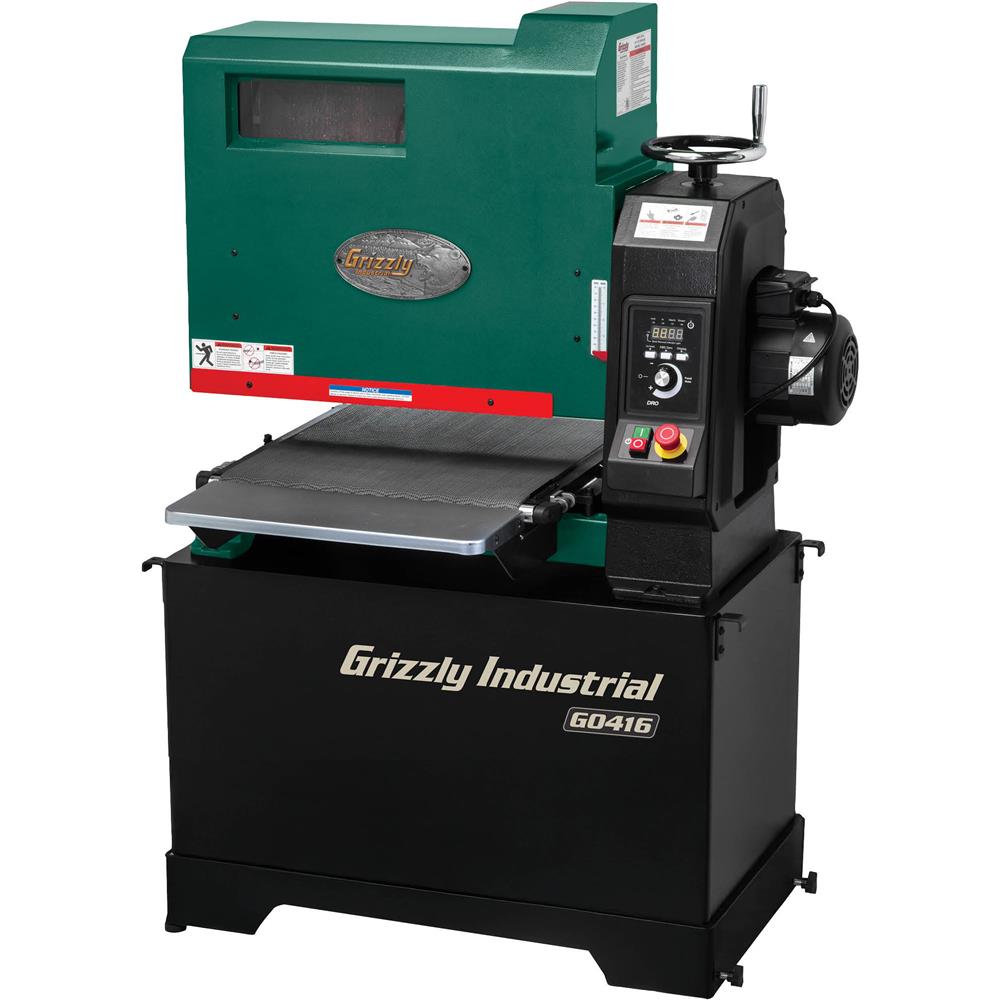
Grizzly G0416 20" 3 HP Open-End Wide-Belt Sander
20-inch open-end frame sands panels up to about 40 inches in two passes.
Shop at Grizzly.com →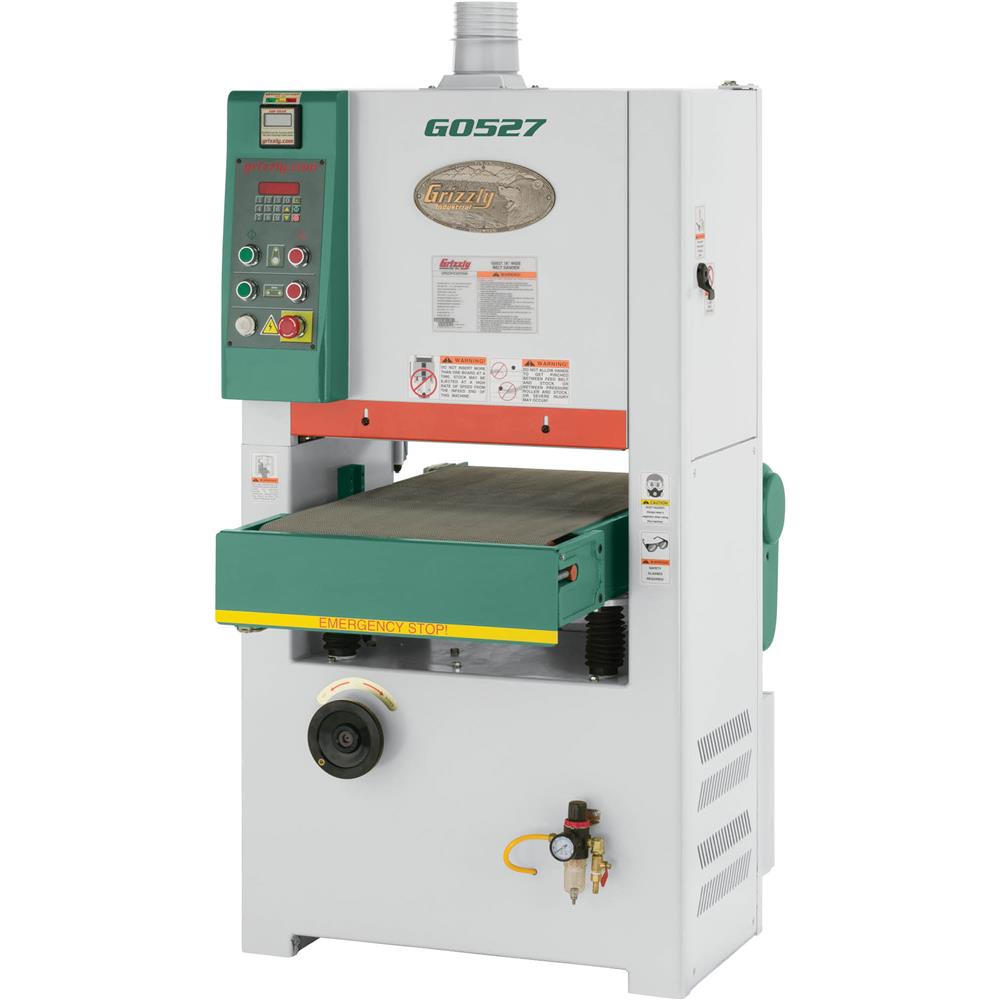
Grizzly G0527 18" 5 HP Wide-Belt Sander
18-inch closed frame with 5 HP for rigid, steady shop sanding.
Shop at Grizzly.com →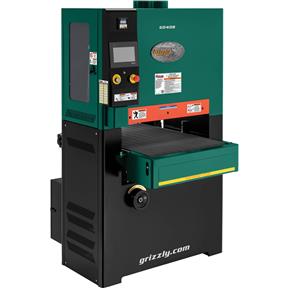
Grizzly G0408 24" 10 HP Extreme Series Wide-Belt Sander
24-inch belt and 10 HP Extreme Series drive for all-day production sanding.
Shop at Grizzly.com →Wide-Belt Sanders Compared
Prices change often and are factory-direct; the figures below are approximate. Tap any product button above for live pricing.
| Model | Belt / Power | Budget | Best For |
|---|---|---|---|
| Grizzly G0416 | 20" open-end, 3 HP | See Grizzly | Best Open-End |
| Grizzly G0527 | 18" closed, 5 HP | See Grizzly | Best 18-Inch |
| Grizzly G0408 | 24" closed, 10 HP | See Grizzly | Best Production 24-Inch |
Wide-Belt Sander Buying Guide
Belt Width & Open-End vs Closed
Belt width sets the widest panel you can sand in a single pass, but the frame type changes the math. A closed-frame sander supports the drum on both ends for maximum rigidity and is limited to the belt width. An open-end sander leaves the outboard side unsupported, so you can feed a panel wider than the belt through one half, rotate it 180 degrees, and run it again to sand the rest. That effectively doubles the working width: a 20-inch open-end machine can handle panels up to roughly 40 inches in two passes. Choose open-end when you occasionally need wider capacity than your floor space or budget allows, and closed-frame when you want the stiffest possible setup at a fixed width.
Horsepower & Feed
Power and feed rate work together to determine how much stock you can remove without the belt stalling. Smaller shop sanders in the 18 to 20-inch range typically run 3 to 5 HP, which suits finish passes and light calibration, while 37-inch production machines often use 10 HP or more to carry a full-width cut. A variable-speed feed conveyor lets you slow down for aggressive grits or heavy stock and speed up for light finishing, and more horsepower keeps the belt moving at a steady rate under load. Plan for the wiring these motors need, generally 240V single-phase or three-phase, along with strong dust collection at the hood.
Wide-Belt vs Drum Sander
A drum sander is the affordable, compact entry point: it wraps abrasive around a rotating drum, fits a small shop, and calibrates panels well, but it removes stock slowly and can leave spiral scratch marks if you feed too fast. A wide-belt sander runs a continuous belt over a platen or contact drum, so it removes material faster, leaves a flatter and more uniform surface, and tolerates higher feed rates. The trade is cost, floor space, and power draw, all of which are higher on a wide-belt machine. If you finish panels occasionally, a drum sander may be enough; if flat, consistent output and throughput matter, the wide-belt sander earns its footprint.
Dimension Before You Sand
A wide-belt sander finishes stock, it does not thickness it. See our planer picks to bring rough lumber close to final size first.
See the Best Thickness PlanersAs an Amazon Associate and Grizzly Industrial affiliate, WorkshopCalc earns from qualifying purchases. Our picks are based on published specs and category research, not paid placement.
The machines these numbers point at
Board feet, cut lists and dust runs all assume a machine on the other end. These are the four that come up most across the calculators here.
 DEWALT DWS780 12 in Sliding Miter Saw
Double bevel sliding cut, the saw most shop layouts here are drawn around.
Check price on Amazon → DEWALT DW734 Benchtop Planer
Three-knife cutterhead, the cheapest route to dimensioning your own stock instead of paying for surfaced lumber.
Check price on Amazon → DEWALT DW618PK Router Kit
Fixed and plunge bases in one kit, which covers both table and handheld work without buying twice.
Check price on Amazon →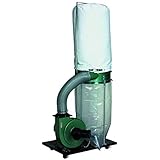 Central Machinery 2 HP Dust Collector
Two horsepower at five micron, sized for a one-person shop rather than a shop vac pretending.
Check price on Amazon →As an Amazon Associate we earn from qualifying purchases, at no extra cost to you. Prices change, so check before buying.