Wrench Size Chart

Photo via Unsplash
Complete reference for SAE and metric wrench sizes by bolt and nut, wrench types, how across-flats sizing works, and an SAE-to-metric cross-reference of safe near-swaps.
Photo via Unsplash
Complete reference for SAE and metric wrench sizes by bolt and nut, wrench types, how across-flats sizing works, and an SAE-to-metric cross-reference of safe near-swaps.
As an Amazon Associate, we earn from qualifying purchases. See all recommendations
Picking the right wrench is simple once you understand one fact: the wrench size equals the distance across the flats of the bolt head or nut. This guide gives you the SAE and metric wrench size for every common bolt, an SAE-to-metric cross-reference showing which sizes are safe near-swaps, an overview of wrench types, and recommended sets for your shop or garage.
The wrench size equals the distance across the flats of the bolt head or nut, the same as the socket size for that fastener. SAE examples: a 1/4" bolt uses a 7/16" wrench, a 3/8" bolt a 9/16", a 1/2" bolt a 3/4". Metric examples: M6 = 10mm, M8 = 13mm, M10 = 16/17mm, M12 = 18/19mm. Some SAE and metric wrenches are close (e.g. 3/8"≈10mm, 9/16"≈14mm) but should not be mixed on tight fasteners. See the full chart below.
One SAE plus metric wrench set covers both columns of the chart below so you never reach for a near-equivalent.
 Better Pick
GEARWRENCH 30-Piece Ratcheting Wrench Set (86702)
SAE + metric, 12-point ratcheting box ends
Under $250
Check Price on Amazon
Better Pick
GEARWRENCH 30-Piece Ratcheting Wrench Set (86702)
SAE + metric, 12-point ratcheting box ends
Under $250
Check Price on Amazon
 Also Great
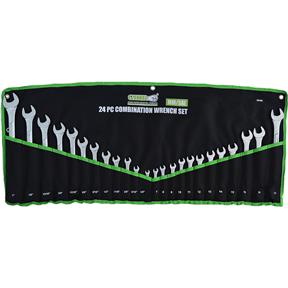
TEKTON 34-Piece Combination Wrench Set (WCB94302)
SAE + metric with store-and-go keeper
Under $250
Check Price on Amazon
Also Great
TEKTON 34-Piece Combination Wrench Set (WCB94302)
SAE + metric with store-and-go keeper
Under $250
Check Price on Amazon
 Good Pick
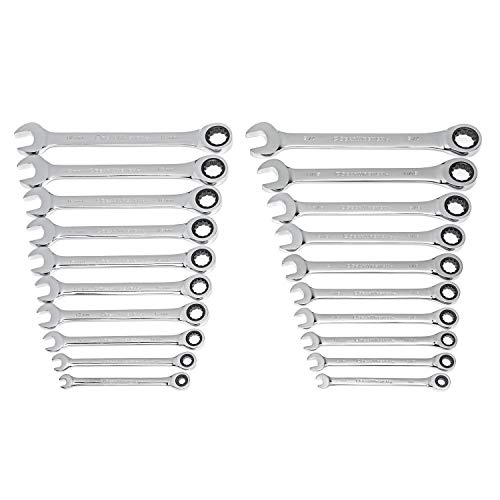
GEARWRENCH 20-Piece Ratcheting Wrench Set (35720A-02)
The everyday SAE + metric range
Under $250
Check Price on Amazon
Good Pick
GEARWRENCH 20-Piece Ratcheting Wrench Set (35720A-02)
The everyday SAE + metric range
Under $250
Check Price on Amazon
Compare all 8 picks in our best wrench sets guide →
As an Amazon Associate, WorkshopCalc earns from qualifying purchases. Prices are approximate and can change.
For standard (SAE) hex-head bolts and nuts, the wrench size matches the distance across the flats of the head. This is the same size as the socket you would use on that fastener. The table below covers the most common SAE bolt diameters and their standard hex wrench sizes.
| Bolt Diameter (SAE) | Wrench Size (Across Flats) | Same as Socket Size |
|---|---|---|
| 1/4" | 7/16" | 7/16" |
| 5/16" | 1/2" | 1/2" |
| 3/8" | 9/16" | 9/16" |
| 7/16" | 5/8" | 5/8" |
| 1/2" | 3/4" | 3/4" |
| 9/16" | 13/16" | 13/16" |
| 5/8" | 15/16" | 15/16" |
| 3/4" | 1-1/8" | 1-1/8" |
| 7/8" | 1-5/16" | 1-5/16" |
| 1" | 1-1/2" | 1-1/2" |



WorkshopCalc is an Amazon Associate and a Grizzly Industrial affiliate. We earn from qualifying purchases.
These are the most common hex head sizes, but heavy-hex, grade-8, and some fine-thread bolts may use a different wrench size for the same bolt diameter. When precision matters, measure across the flats of the actual head. For matching socket sizes, see our socket size chart.
Metric bolts are named by their thread diameter (the M number), and the wrench size is the across-flats measurement of the head in millimeters. Most modern fasteners follow ISO/DIN sizing, though some older or coarse bolts use the larger of the two listed sizes.
| Bolt Size (Metric) | Wrench Size (mm, Across Flats) | Notes |
|---|---|---|
| M3 | 5.5mm | Small machine screws, electronics |
| M4 | 7mm | Light hardware, panels |
| M5 | 8mm | General light-duty fasteners |
| M6 | 10mm | Very common in bikes and appliances |
| M8 | 13mm | Common automotive and furniture bolt |
| M10 | 16mm / 17mm | 16mm (ISO/DIN) or 17mm (older/coarse) |
| M12 | 18mm / 19mm | 18mm (ISO/DIN) or 19mm (older/coarse) |
| M14 | 21mm / 22mm | 21mm (ISO/DIN) or 22mm (older/coarse) |
| M16 | 24mm | Structural and heavy hardware |
| M18 | 27mm | Large structural fasteners |
| M20 | 30mm | Heavy structural connections |
Sizes like M10 (16mm vs 17mm) and M12 (18mm vs 19mm) depend on the bolt standard. ISO/DIN fasteners trend toward the smaller size; older and coarse-thread bolts often use the larger one. When in doubt, measure across the flats of the head.
Once the wrench drawer is complete, these are the next two purchases in most home shops.
SAE and metric wrenches are never an exact match, but several pairs are close enough to substitute in a pinch on loose, low-torque fasteners. The table below lists common SAE wrench sizes, their exact millimeter equivalent, and the nearest metric wrench, along with whether it is a safe near-swap.
| SAE Wrench | Exact Equivalent (mm) | Nearest Metric Wrench | Difference | Safe Near-Swap? |
|---|---|---|---|---|
| 5/32" | 3.97mm | 4mm | 0.03mm | Yes, nearly identical |
| 3/16" | 4.76mm | 5mm | 0.24mm | Caution, slightly loose |
| 1/4" | 6.35mm | 6mm | 0.35mm | No, too loose, will round |
| 5/16" | 7.94mm | 8mm | 0.06mm | Yes, nearly identical |
| 3/8" | 9.53mm | 10mm | 0.47mm | Caution, loose, light duty only |
| 7/16" | 11.11mm | 11mm | 0.11mm | Yes, close, low-torque only |
| 1/2" | 12.7mm | 13mm | 0.30mm | Caution, loose, light duty only |
| 9/16" | 14.29mm | 14mm | 0.29mm | Caution, snug on metric, loose on SAE |
| 5/8" | 15.88mm | 16mm | 0.12mm | Yes, close, low-torque only |
| 3/4" | 19.05mm | 19mm | 0.05mm | Yes, nearly identical |
Even the closest pairs (5/32"≈4mm, 5/16"≈8mm, 3/4"≈19mm) leave a tiny gap that concentrates force on the corners of the fastener. On a tight, torqued, or rusted bolt that gap will round off the head. Use a near-swap only for hand-tight, low-torque fasteners, never for anything you need to break loose or torque to spec.
Different wrench styles trade off speed, access, and grip. Most shops carry a few of each so the right tool is always at hand.
Wrench sizes describe the fastener, not the wrench itself. The number stamped on a wrench is the distance across the flats (often abbreviated A/F) of the hex head or nut it fits, the straight-line distance between two parallel sides of the hexagon.
This is why the wrench size for a bolt is identical to the socket size for that same bolt: both tools grip the same across-flats dimension. It also explains why a bolt's name (its thread diameter, like 1/2" or M10) is not the same as its wrench size. A 1/2" bolt has a 3/4" head, and an M10 bolt has a 16mm or 17mm head, because the head is sized to give the wrench enough material to grip without stripping.
To identify an unknown fastener, measure straight across two opposite flats of the head with calipers or a ruler. That measurement is your wrench size. If it lands between an SAE and a metric size, use the cross-reference table above to confirm which system the bolt belongs to.
Most workshops and garages encounter both standards. Domestic vehicles, older equipment, and a lot of US-made hardware use SAE (fractional inch) fasteners. Imported cars, bicycles, electronics, appliances, and most modern machinery use metric. Many vehicles built today even mix the two systems on the same chassis.
Because the near-swaps between systems are imperfect and risky on tight fasteners, the reliable solution is to own both an SAE and a metric set. A combination wrench set in each system, plus a ratcheting set for speed and an adjustable wrench as a catch-all, will handle nearly every fastener you meet. For matching sockets and torque specs, pair this chart with our socket size chart and bolt torque chart.
Once you have the right wrench on the fastener, tighten it to spec. Our bolt torque chart lists recommended torque values by bolt size, grade, and thread for SAE and metric fasteners.
View Bolt Torque ChartThese are the wrench types worth owning for a well-equipped shop or garage. All links are affiliate links - we may earn a commission at no cost to you.
As an Amazon Associate, WorkshopCalc earns from qualifying purchases. This helps support the site at no additional cost to you. We only recommend products we would use in our own workshops.
SAE and metric socket sizes by bolt and nut, matching the wrench sizes above.
View Chart →Recommended torque values by bolt size, grade, and thread for SAE and metric.
View Chart →Complete reference for fractional, number, letter, and metric drill bit sizes.
View Chart →Browse every WorkshopCalc reference chart in one place.
View All →Updated 2026. If you have the wrench and need the bolt size, read the charts backwards. A wrench measures the distance across the flats of the head, so the bolt it fits is always smaller than the number stamped on the wrench.
| SAE Wrench | Fits Bolt Diameter |
|---|---|
| 7/16" | 1/4" |
| 1/2" | 5/16" |
| 9/16" | 3/8" |
| 5/8" | 7/16" |
| 3/4" | 1/2" |
| 13/16" | 9/16" |
| 15/16" | 5/8" |
| 1-1/8" | 3/4" |
| 1-5/16" | 7/8" |
| 1-1/2" | 1" |
| Metric Wrench | Fits Bolt |
|---|---|
| 5.5 mm | M3 |
| 7 mm | M4 |
| 8 mm | M5 |
| 10 mm | M6 |
| 13 mm | M8 |
| 16 mm or 17 mm | M10 |
| 18 mm or 19 mm | M12 |
| 21 mm or 22 mm | M14 |
| 24 mm | M16 |
A standard 1/2 inch SAE bolt with a hex head uses a 3/4 inch wrench. The wrench size matches the distance across the flats of the bolt head, not the bolt's thread diameter. Note that some 1/2 inch bolts (such as certain grade-8 or fine-thread fasteners) can use a 13/16 inch head, so always confirm by measuring across the flats.
Sometimes, but carefully. A few SAE and metric sizes are nearly identical: 3/8 inch is about 9.53mm (close to 10mm), 9/16 inch is about 14.29mm (close to 14mm), and 3/4 inch is about 19.05mm (close to 19mm). These near-swaps work in a pinch on loose fasteners, but the small gap can round off the corners of a tight or high-torque bolt. For any fastener you need to torque or that is seized, use the correct-system wrench.
An M10 bolt typically uses a 16mm or 17mm wrench depending on the standard. Most modern metric bolts (DIN/ISO) use a 16mm head on M10, while older or coarse fasteners often use 17mm. Measure across the flats of the head to confirm which one your bolt needs.
An open-end wrench has a U-shaped opening that slides onto a fastener from the side, useful where you cannot drop the wrench over the top. A box-end wrench fully surrounds the fastener with a 6- or 12-point ring, gripping all corners for more torque and far less risk of rounding. A combination wrench has one open end and one box end of the same size, giving you both options in a single tool.
A practical home set covers SAE sizes from 1/4 inch through 3/4 inch (1/4, 5/16, 3/8, 7/16, 1/2, 9/16, 5/8, 11/16, 3/4) and metric sizes from 8mm through 19mm (8, 10, 11, 12, 13, 14, 15, 16, 17, 18, 19mm). A combination wrench set in both SAE and metric covers the vast majority of household, automotive, and bicycle fasteners.
A 10 mm wrench fits the head of an M6 bolt (6 mm thread diameter). It also fits M6 nuts, and it is one of the most used metric sizes on bikes, appliances and car trim.
A 7/16 inch bolt has a 5/8 inch head, so use a 5/8 inch wrench. If you want the wrench for a 7/16 inch head instead, that fits a 1/4 inch bolt.
A 13 mm wrench fits the head of an M8 bolt. The nearest SAE wrench is 1/2 inch (12.7 mm), which is too small to go on a 13 mm head, so keep a 13 mm wrench in the set.
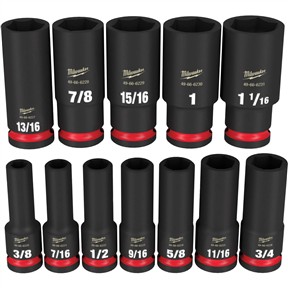
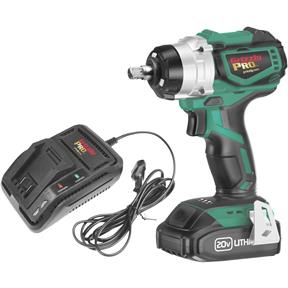
Gear for this: see our best cordless impact wrenches guide.