Your garage floor takes more abuse than any other surface in your home, hot tires, oil drips, dropped tools, and years of moisture. The right garage flooring transforms a dull concrete slab into a durable, easy-to-clean workspace. This guide covers every option from budget roll-out mats to professional polycuramine coatings, helping you choose the best garage flooring for your budget and use case.
Quick Picks: Our Top Recommendations
After researching the top garage flooring products against manufacturer specifications and verified owner reviews, these are our best picks across every category and budget:
Prices change on Amazon. Amounts shown are planning estimates, not live quotes. Tap any button for current pricing.
Compare the key specifications of our top-rated garage flooring options at a glance:
Product
Type
Coverage
Durability
Prep Required
Hot Tire Safe
Price
Detailed Reviews
Photo via Unsplash
Garage Flooring Buying Guide
Choosing the right garage flooring involves balancing budget, durability needs, installation complexity, and the current condition of your concrete slab. If you are building out a car-focused space, our automotive garage setup guide walks through the rest of the project. Here is what to consider:
Flooring Types Compared
Epoxy & Polycuramine Coatings
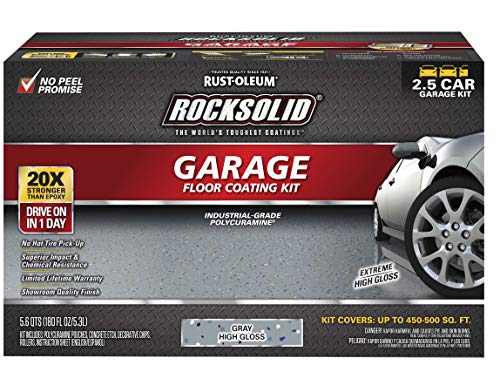
Chemical coatings that bond directly to concrete. Polycuramine (Rust-Oleum RockSolid) is 20x stronger than standard epoxy. Requires thorough surface prep. Longest lasting option when properly applied, 10 to 20 years. Not reversible once applied.
Interlocking Tiles
PVC or polypropylene tiles that snap together and lay loose over concrete. No adhesive, no prep, fully reversible. Higher upfront cost but individual tiles can be replaced. Best for workshops with heavy rolling tool loads.
Roll-Out Mats
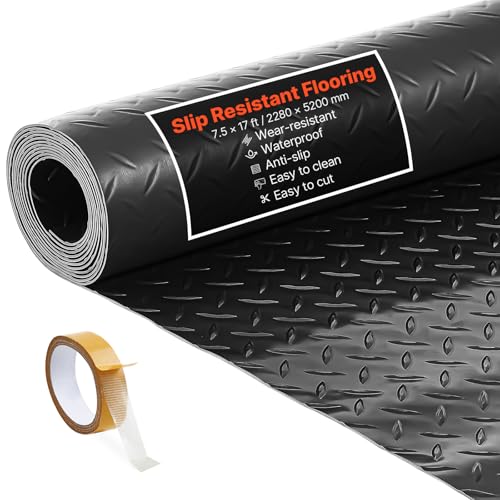
Solid PVC sheets that roll out and lay flat. Fastest installation, minutes, not days. No prep required, fully reversible. Ideal for renters or anyone who wants flexibility. Seams between rolls are the only downside.
Surface Preparation
Surface prep is the most important factor in coating longevity. Skipping this step is the primary reason DIY epoxy floors fail within a year:
Degreasing: Remove all oil and grease stains with a concrete degreaser before any other step
Acid etching: Opens concrete pores for better adhesion; use muriatic or phosphoric acid solution
Diamond grinding: Mechanical method that creates a superior bonding profile; best for 100% solids systems
Moisture testing: Tape plastic sheeting to the floor for 24 hours; condensation indicates moisture vapor issues
Pro Tip
If your concrete was previously sealed or painted, mechanical grinding is the only reliable way to achieve proper adhesion. Acid etching alone will not adequately cut through old sealers.
Hot Tire Pickup: A Critical Consideration
Hot tire pickup is the most common failure mode for DIY garage coatings. When tires heat up during driving and park on a coated floor, the coating can bond to the tire and peel when you drive away. Avoid this by choosing:
100% solids epoxy or polycuramine: Specifically engineered to resist hot tire contact
Water-based epoxy kits: These nearly always fail with hot tire contact, avoid for parking areas
Interlocking tiles: All quality tiles are hot tire safe regardless of brand
Roll-out vinyl: Quality PVC mats handle hot tire contact well without peeling
Cost Per Square Foot Analysis
For a standard two-car garage of 440 square feet:
Budget epoxy kit: $0.50-0.75/sq ft, $220-330 total, but shorter lifespan
Polycuramine coating: $0.75-1.00/sq ft, $330-440 total, 10-15+ year lifespan
Pro-grade broadcast system: $1.50-2.00/sq ft DIY, $660-880 total, 20+ year lifespan
Climate and Moisture Considerations
Geographic location dramatically impacts which flooring type performs best. In colder regions, plan the floor alongside proper garage heating so the slab and the space stay comfortable year-round:
Cold climates: Freeze-thaw cycles stress coating adhesion; choose 100% solids or tiles over water-based epoxy
High humidity regions: Test for moisture vapor transmission before applying coatings; consider tiles or mats instead
Below-grade garages: Coatings are risky with high groundwater; tiles or mats are safer choices
Direct sun exposure: UV-stable topcoats prevent yellowing and chalking in sun-exposed garages
As an Amazon Associate, WorkshopCalc earns from qualifying purchases. Our recommendations are based on thorough research against manufacturer specifications and verified owner reviews. We only recommend products we believe provide genuine value to workshop owners.