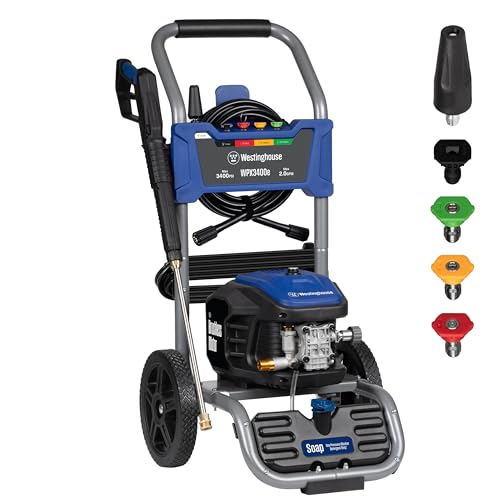
9 Best Pressure Washers 2026: Gas, Electric & Commercial for Workshop Use
Updated 20265,100+ words20 min read
A pressure washer is one of the most versatile tools in a garage or workshop. From stripping a painted floor to degreasing an engine block, washing down concrete, or detailing a vehicle, the right pressure washer handles tasks that would take hours by hand. This guide reviews the 9 best pressure washers for workshop use in 2026, covering gas and electric options across every budget, with full PSI, GPM, and cleaning unit comparisons to help you choose correctly.
Quick Picks: Our Top Recommendations
After evaluating cleaning performance, reliability, and value across all categories, here are our top picks for the best pressure washers in 2026:
Prices change on Amazon. Amounts shown are planning estimates, not live quotes. Tap any button for current pricing.
Compare PSI, GPM, and cleaning units for all 9 pressure washers side by side:
Model
PSI
GPM
Cleaning Units
Power Source
Hose Length
Weight
Price
Detailed Reviews
Photo via Unsplash
Pressure Washer Buying Guide
Choosing the right pressure washer requires matching the machine to the surfaces you clean and the frequency of use. Here is what matters most:
Understanding PSI, GPM, and Cleaning Units
PSI (Pressure)
Pounds per square inch measures how forcefully water exits the nozzle. Higher PSI breaks apart stubborn grime, strips paint, and cuts through grease. Too much PSI on soft surfaces like wood or siding can cause damage. Match PSI to the hardest surface you regularly clean.
GPM (Flow Rate)
Gallons per minute determines how quickly you rinse away loosened debris. High PSI with low GPM leaves you with a powerful stream that cuts but does not rinse efficiently. Most effective machines balance both: 2,500 PSI with 2.5 GPM outperforms 3,500 PSI with 1.5 GPM for most real-world tasks.
Cleaning Units (CU = PSI x GPM)
Cleaning units is the true measure of washing power. A 2,300 PSI / 2.0 GPM machine delivers 4,600 CU. A 3,000 PSI / 1.5 GPM machine delivers 4,500 CU. The first machine is more effective despite lower PSI. Always calculate CU when comparing models across different manufacturers.
Gas vs Electric: Choosing the Right Power Source
The gas vs electric decision is one of the most important you will make. The right answer depends on your primary use cases:
Choose electric if: You primarily clean vehicles, decks, furniture, and siding; you want instant start-up and quiet operation; you have standard household current available at your work location; and maintenance simplicity is a priority
Choose gas if: You regularly clean concrete, heavy equipment, or large commercial surfaces; you need maximum PSI and GPM for industrial tasks; you work in locations without electrical access; or you need to run the washer continuously for extended periods
Portability factor: Gas machines require no power cord, making them more maneuverable on large properties; electric machines are better suited to confined garage and driveway work where an outlet is nearby
As an Amazon Associate, WorkshopCalc earns from qualifying purchases. Our recommendations are based on thorough research and real-world performance data. We only recommend products we believe provide genuine value to workshop and garage owners.