A sandblasting cabinet contains the mess of abrasive blasting so you can strip rust, paint, and scale off parts without coating your whole shop in dust. The choice comes down to three things: the cabinet size and door opening (does your typical part fit with room to work), the gun and abrasive pickup (siphon-fed for simplicity or pressure-fed for speed), and the dust collection and air supply that keep the window clear and the gun fed. Air is usually the real bottleneck, so check the demand against your compressor first with our best air compressors guide and the air tool CFM chart. Below are our top blast cabinet picks for 2026, followed by a buying guide.
Best benchtop: the Grizzly T27157 for small parts on a bench. Best professional floor cabinet: the Grizzly G0708. Best value floor unit: the 60 Gallon Sandblasting Cabinet with stand. Best large capacity: the 90 Gallon Sandblasting Cabinet. Best premium with dust collector: the Eastwood B100. Size the cabinet to your typical part, then make sure your air compressor can feed the gun continuously.
Our Top Sandblasting Cabinet Picks
Prices vary by production run and retailer; treat the figures below as planning estimates and tap any button for current pricing.
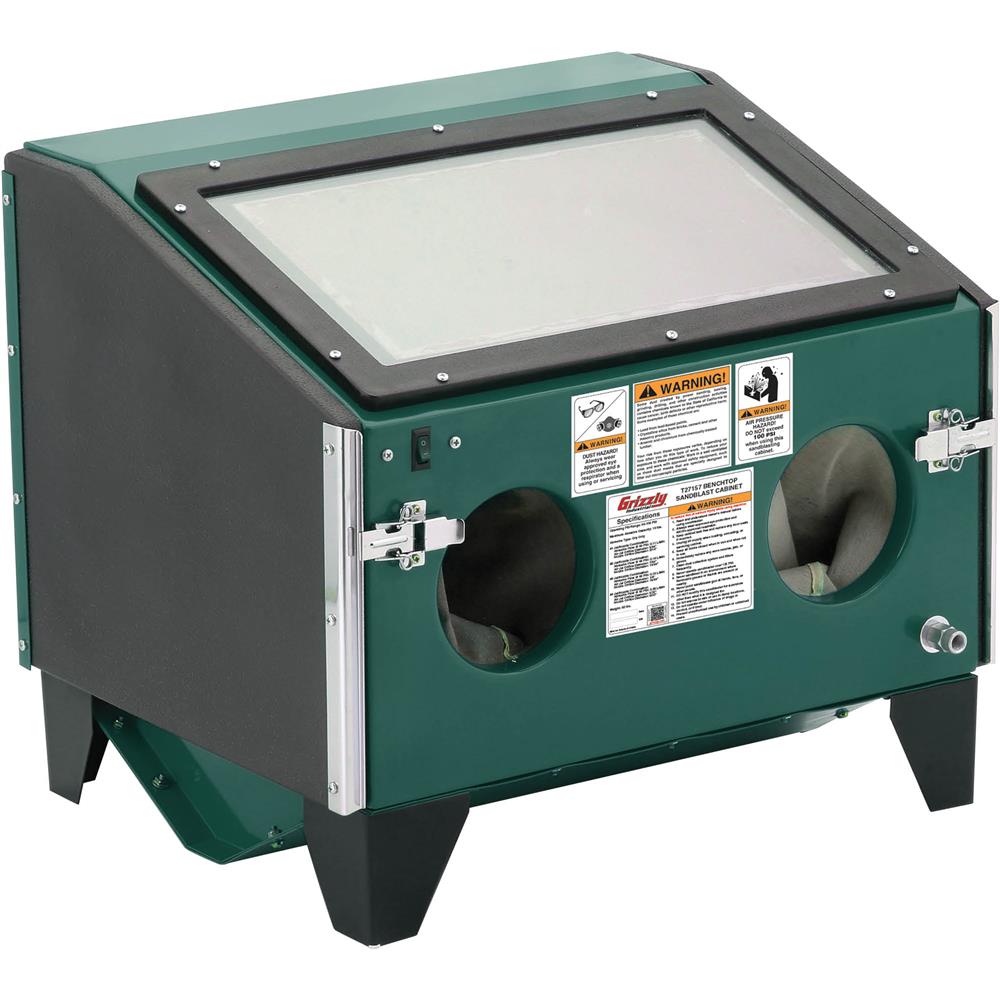
Grizzly T27157 Benchtop Sandblasting Cabinet
Compact benchtop blast cabinet for small parts.
Shop at Grizzly.com →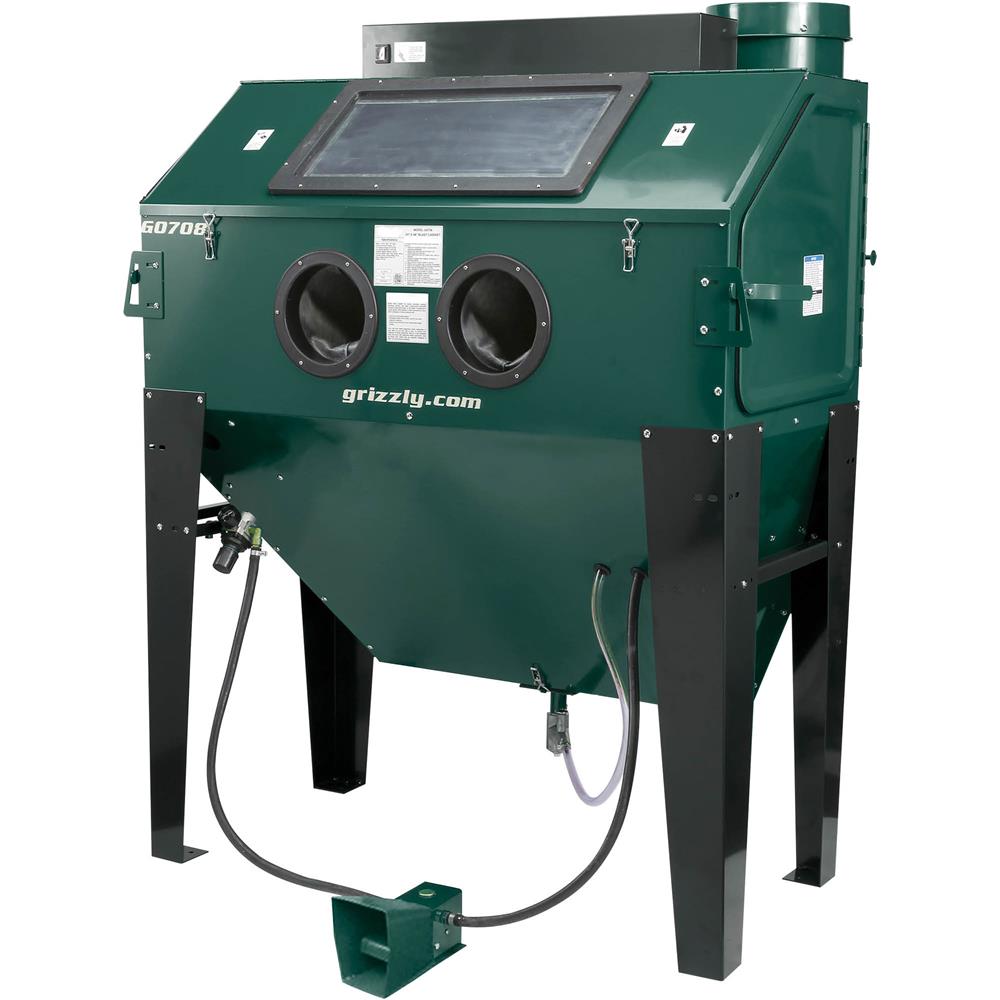
Grizzly G0708 Professional Sandblasting Cabinet
Full-size professional floor blast cabinet.
Shop at Grizzly.com →
60 Gallon Sandblasting Cabinet, 40-120PSI Sand Blasting Cabinet with Stand, Heavy Duty Steel Sand Blaster with Blasting Gun & 4 Ceramic Nozzles for Paint, Stain, Rust Removal
60-gallon steel cabinet with stand, gun, and four ceramic nozzles.

90 Gallon Sandblasting Cabinet, Blue
Large 90-gallon floor cabinet for bigger parts.

Eastwood B100 Large Abrasive Media Blasting Blast Cabinet with Dust Collector | Internal Dimensions: 45-3/4"W x 22-3/4"D x 22-3/4"H
Large premium blast cabinet with a built-in dust collector.
Sandblasting Cabinets Compared
Prices change often; the figures below are approximate. Tap any product button above for live pricing.
| Model | Type | Budget | Best For |
|---|---|---|---|
| Grizzly T27157 | Benchtop cabinet | See Grizzly | Best Benchtop |
| Grizzly G0708 | Professional floor cabinet | See Grizzly | Best Professional |
| 60 Gallon Cabinet | Floor cabinet w/ stand | Under $250 | Best Value 60-Gallon |
| 90 Gallon Cabinet | Large floor cabinet | Under $500 | Best Large 90-Gallon |
| Eastwood B100 | Large cabinet + dust collector | Under $2,500 | Best Premium |
Sandblasting Cabinet Buying Guide
Cabinet Size & Work-Through
Start with the parts you blast most often, not the single biggest job you can imagine. A benchtop cabinet is ideal for hardware, brackets, small castings, and carburetor parts, while a 60 to 90 gallon floor cabinet takes wheels, manifolds, and small panels. Beyond raw interior volume, check the door or lid opening and the height under the glass, because a part that technically fits but cannot be rotated or reached with the gun makes every job slower. Look for well-placed glove ports, a sturdy work grate to keep parts off the media, and a body seal that keeps dust in and abrasive from leaking out at the seams.
Gun Type & Abrasive Pickup (Siphon vs Pressure)
The gun and how it feeds abrasive set how fast the cabinet cuts. Siphon (suction or gravity) systems draw media up from the hopper using the airflow of the gun, which is simpler, reuses abrasive well, and is standard on hobby and light-shop cabinets, but it works more slowly on heavy rust and coatings. Pressure systems hold abrasive in a pressurized pot and drive it out under pressure, hitting the part much harder and stripping far faster, at the cost of complexity and media use. Also match the ceramic or carbide nozzle and abrasive type to the work; a larger nozzle strips faster but demands more air, and fine media with a small nozzle gives control on delicate parts.
Dust Collection & Air Supply (CFM)
Two support systems make or break a cabinet. Dust collection clears the fog of spent abrasive so you can see the work and keeps reclaimed media cleaner; a built-in or add-on collector beats a bare vac port for visibility and for keeping fine dust out of your lungs. Air supply is the more common bottleneck: blasting is a continuous-demand job, and larger nozzles or a pressure setup can pull 15 to 20 CFM or more at 80 to 125 PSI without pause. Size the compressor to deliver that flow without constantly cycling, and only step up nozzle and gun as far as your air can feed. Undersized air, not the cabinet, is the usual reason a blaster feels weak.
Feed It Enough Air
A blast cabinet is only as strong as the compressor behind it. See our air compressor picks to match CFM to your gun.
See the Best Air CompressorsAs an Amazon Associate and Grizzly Industrial affiliate, WorkshopCalc earns from qualifying purchases. Our picks are based on published specs and category research, not paid placement.