A belt grinder is the single most important machine in a knife shop: it profiles the blank, grinds the bevels, and refines the finish, all on one platform. The choice comes down to three things: the belt size (the 2x72 standard versus compact 2x42 and 1x42 machines, and how many abrasives you can get for it), the drive (variable speed and motor power for heat control and stock removal), and the tooling (platen, contact wheels, and tool-arm attachments for flat and hollow grinds). For lighter finishing and general shop work, a belt and disc sander or a bench grinder covers different ground, and a metal-cutting bandsaw handles the rough stock cuts before grinding begins. Below are our top knife-making belt grinder picks for 2026, followed by a buying guide.
Best large-format: the Grizzly G0972 3x78 knife-making grinder, factory-direct. Best compact machine: the Grizzly T32459Z 2x42 belt sander/grinder. Best 2x72 value: the VEVOR variable-speed 2HP grinder with VFD. Best budget compact: the BUCKTOOL 1x42 belt and disc sander. Prioritize belt-size and belt availability, then variable speed, over extra attachments.
Our Top Knife-Making Belt Grinder Picks
Prices vary by production run and retailer; treat the figures below as planning estimates and tap any button for current pricing.
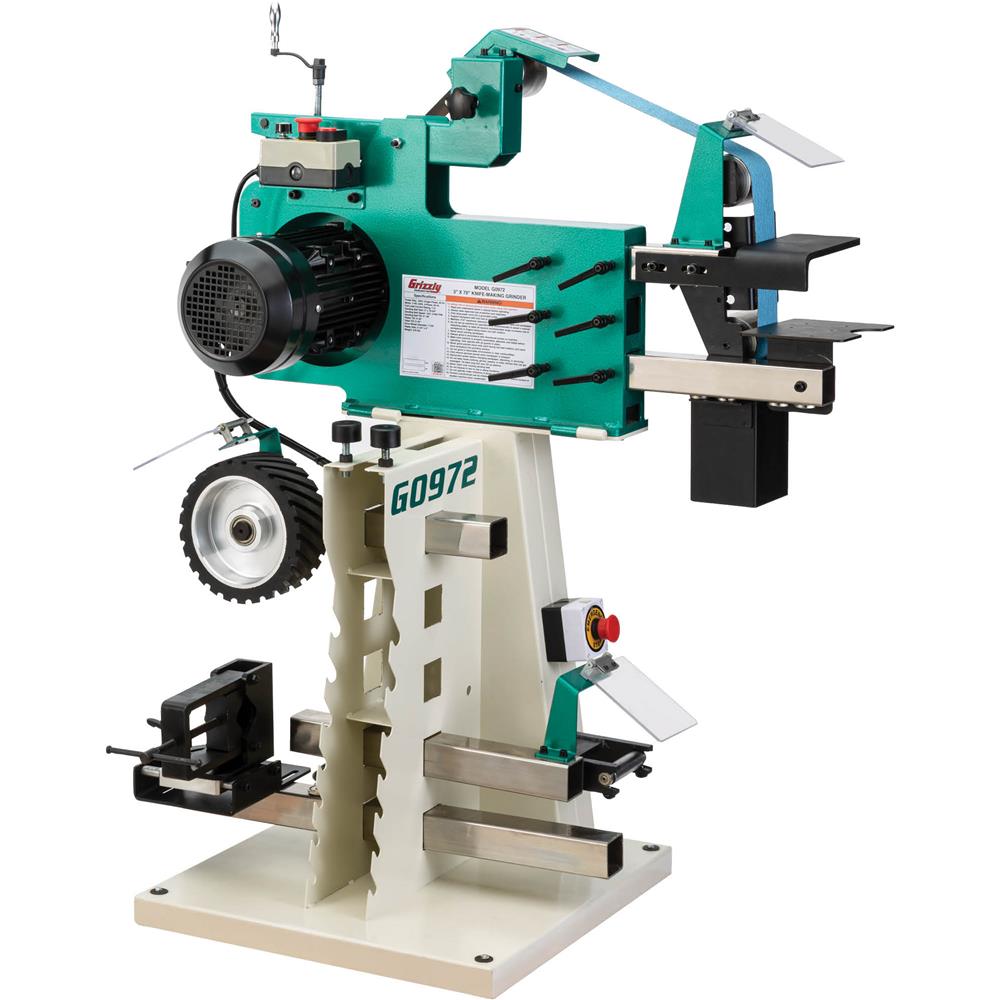
Grizzly G0972 3" x 78" Knife-Making Grinder
Large-format 3x78 knife-making belt grinder.
Shop at Grizzly.com →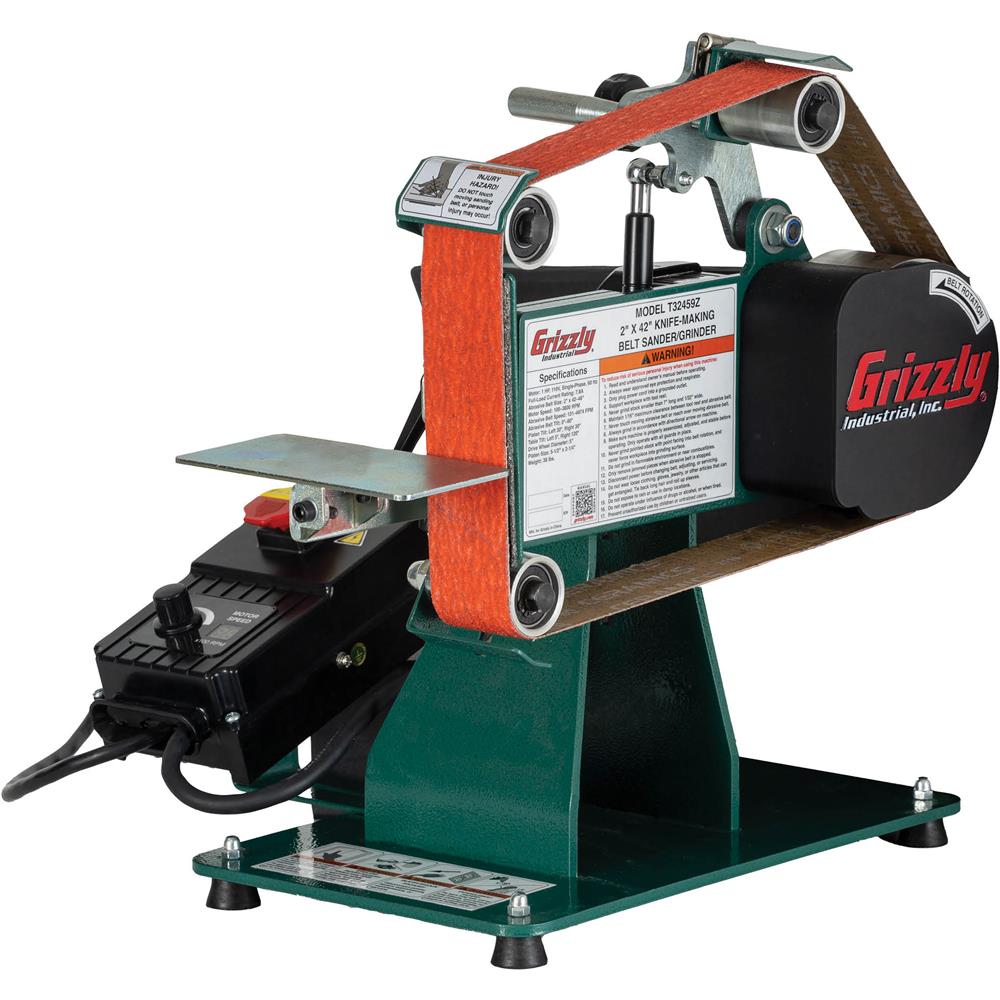
Grizzly T32459Z 2" x 42" Knife-Making Belt Sander/Grinder
Compact 2x42 knife-making belt sander and grinder.
Shop at Grizzly.com →
VEVOR Belt Grinder Sander, 72 x 2-Inch Variable Speed Belt Polisher with VFD, 1500W 2HP Polishing Grinding Machine with 3 Grinding Moulds & 3PCS Sanding Belts for Metalworking, Knife Making
Variable-speed 2x72 belt grinder with VFD and 2HP motor.

BUCKTOOL 1" x 42" Belt and 8" Disc Sander, Dual Speed
Dual-speed 1x42 belt sander with an 8-inch disc for small blades and sharpening.
Knife-Making Belt Grinders Compared
Prices change often; the figures below are approximate. Tap any product button above for live pricing.
| Model | Belt Size | Budget | Best For |
|---|---|---|---|
| Grizzly G0972 | 3" x 78" | See Grizzly | Best 3x78 Grinder |
| Grizzly T32459Z | 2" x 42" | See Grizzly | Best Compact 2x42 |
| VEVOR 2x72 | 2" x 72" | Under $1,000 | Best 2x72 Value |
| BUCKTOOL 1x42 Belt/Disc | 1" x 42" | Under $250 | Best Budget 1x42 |
Knife-Making Belt Grinder Buying Guide
Belt Size & Belt Availability
Belt size is the first decision because it dictates both grinding capacity and what abrasives you can buy. The 2-inch by 72-inch belt is the bladesmith standard: the long loop runs cooler and lasts longer, and nearly every abrasive maker stocks 2x72 in a deep range of grits and materials, from aggressive ceramic and zirconia to gentle cork, felt, and leather belts for finishing. Compact 2x42 and 1x42 machines cost less and take up less bench space, but they run shorter belts with fewer grit and material options and less platen length for flat grinding. Larger formats like a 3x78 add width for wider blades and heavy stock removal. Before you commit, check that belts for the size you choose are easy to source in the grits you actually use.
Variable Speed & Motor
How the belt is driven matters as much as its size. A variable-speed drive, usually a VFD controlling the motor, lets you slow the belt down to limit heat that can draw the temper or ruin a hardened edge, then speed it up for fast rough grinding, handle shaping, and buffing (for a true mirror polish, a dedicated bench buffer with a cotton wheel is faster). Fixed-speed machines still make knives, but they trade that heat control for simplicity. Motor power in the 1 to 2 HP range suits most hobby and small-shop work and pushes through hardened steel without bogging on fresh belts, while compact 1/3 to 1 HP sanders handle lighter stock removal and finishing. Remember that sharp, quality belts cut faster and cooler than raw horsepower alone.
Contact Wheels, Platen & Tool-Arm Versatility
The attachments behind the belt shape the bevel. A flat platen backs the belt for flat grinds, while a contact wheel, a rubber-covered wheel, produces hollow (concave) bevels and reaches into curves; smaller-diameter wheels grind tighter radii. The more configurations a machine supports, the more grinding jobs it covers. On the 2x72 platform a tool arm lets you swap between platen, large and small contact wheels, and rotary or slack-belt setups, which is a big reason 2x72 grinders are so versatile. Compact machines usually come with a fixed platen and a single contact wheel, which is plenty for basic knife making but less adaptable as your work grows.
Cut the Stock Before You Grind
A grinder shapes the blade, but a bandsaw makes the rough cuts first. See our metal-cutting bandsaw picks to round out the shop.
See the Best Metal-Cutting BandsawsAs an Amazon Associate and Grizzly Industrial affiliate, WorkshopCalc earns from qualifying purchases. Our picks are based on published specs and category research, not paid placement.